
Flagging Down the Double E’s is an email newsletter exploring Bob Dylan performances throughout history. Some installments are free, some are for paid subscribers only. Sign up here:
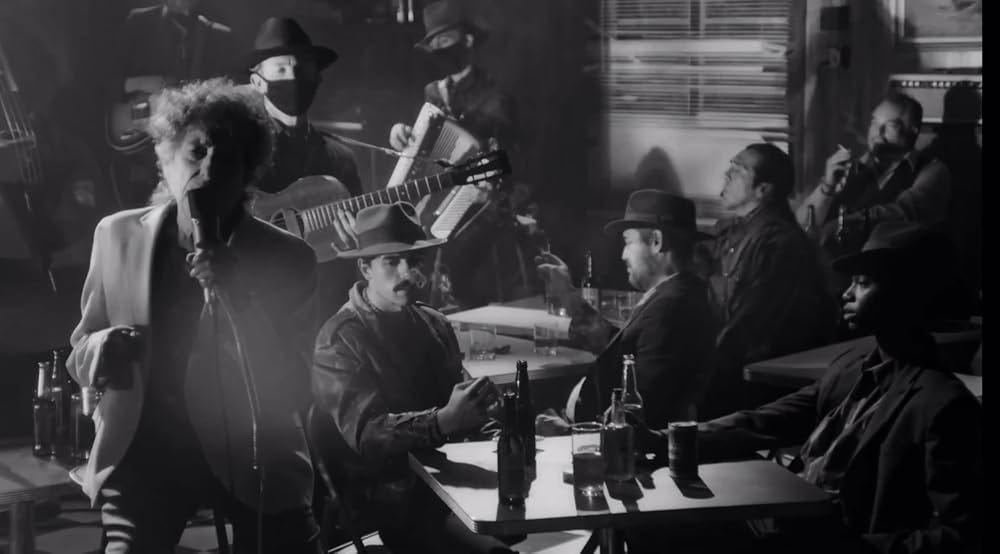
Five years ago today, Bob Dylan released his performance film Shadow Kingdom. Last year, I spoke to one of the onscreen musicians (plus one of the offscreen guitarists who recorded the music). Today, I speak to two of the cast members who appear in the film audience—smoking, drinking, dancing, and generally helping give the film its noir-roadhouse vibe: King Orba and Craig Stark.
King Orba
King Orba is an actor and musician from Oklahoma City. His extensive filmography includes The Cleaner and Stargirl. His latest album is 2025’s Soft Wax. You can find him on Instagram.
How did you get involved in Shadow Kingdom?
This came about because I have a good friend who’s an actor in Hollywood, a guy named Craig Stark. We did a Western together in 2017 and just stayed in touch.
I remember the day. I was at the Beverly Hills Hotel. I’d just had a late breakfast downstairs. I got into my car, I was about to head back to the west side in Santa Monica. The phone rang, and it’s Craig. He’s like, “Hey, man, what are you doing tomorrow? There’s this thing. Can you send in some [head]shots? I’m trying to find some older-looking, interesting people for my friend Alma Har’el, this director.”
I didn’t have anything on my phone at the time. I said, “Let me get home to my computer. What is it?” He says, “Music videos with Bob Dylan.” I said, “Say no more” and I raced home.
I found some good headshots showing me showing my age. Alma saw my photos, and that was it.
So the following day, that Monday on the west side in Santa Monica, this restaurant that we turned into a set—this was exactly one week before his eightieth birthday, I believe. It was a mixture of men and women. Maybe twenty of us. Then, of course, there was the band.
We’d do at least two songs a day. We’d come in in the morning and spend the morning doing one song, and then another song [in the afternoon]. They started stacking it where the last couple of days they’d squeeze in a third. On a few of them, Bob had just a few of the girls. On some of them, you had everybody, in this set that they built like an old music tavern out in the swamps.
I remember Bob being very engaged. The very first day, he had one of his day-to-day guys—guy about my age, maybe late 50s, 60—who came and gave us a little speech before right before we started. He kind of looked like a cowboy. He might have even had a cowboy hat. He gave a speech basically, in so many words: Just be respectful and don’t approach Bob. That kind of thing.
So I was half expecting Bob to just show up and do it and then leave. It was the absolute opposite. He was having so much fun. As they were setting these shots up, he was there with Alma and walking around. He’d see one of the cast members, a very striking woman, and say, “Maybe she’s over here.” He was like a kid in a candy store.
We all got made up in the morning. We would hit the makeup chair and all go through. It wouldn’t take long. Then Bob would go into the same place that we did. You know, it wasn’t like he was secluded somewhere else.
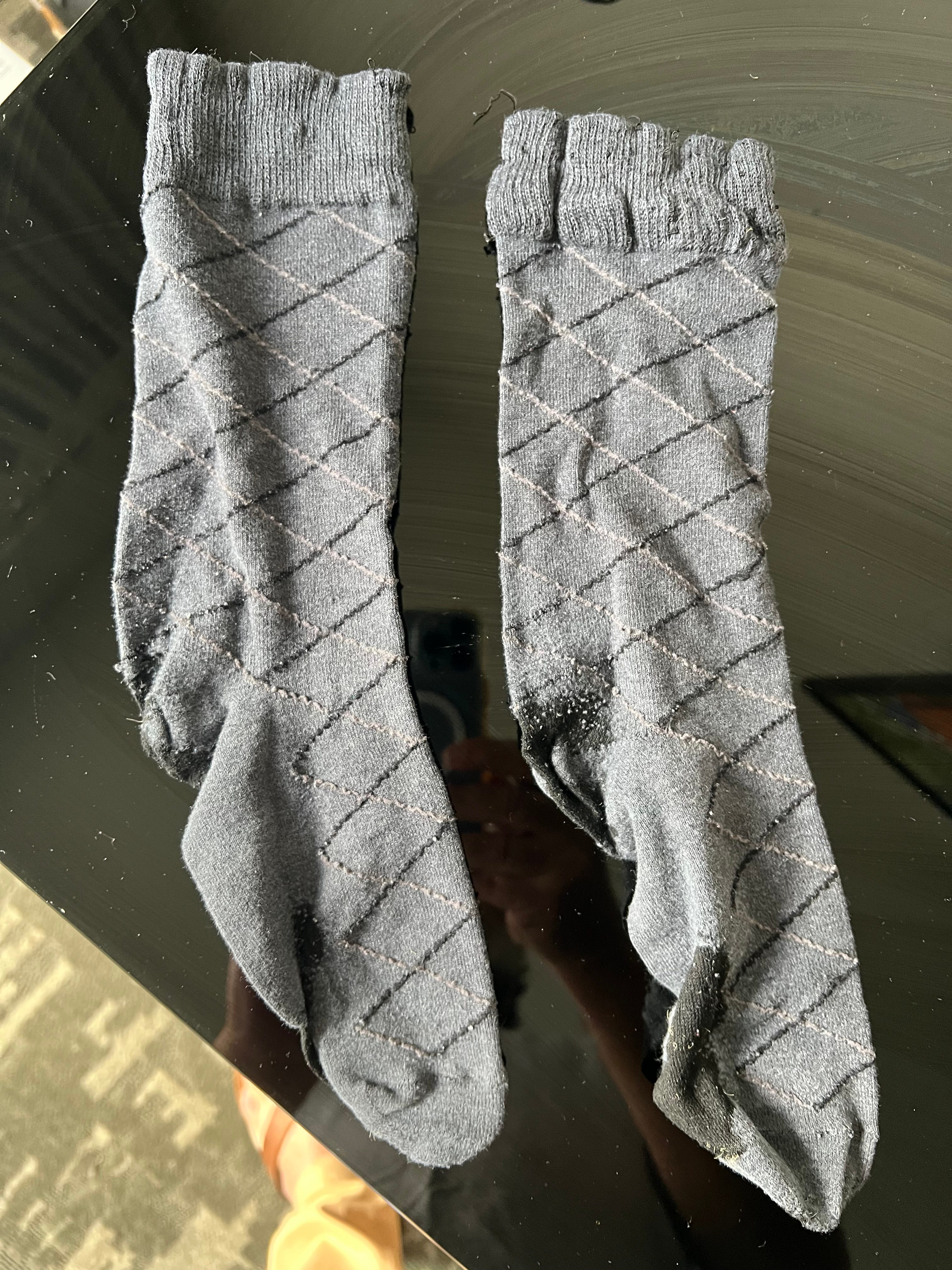
You’ll notice in the film that the cast are essentially in the same wardrobe throughout. Minus maybe a few added flairs with role cast, we all wore our own personal wardrobe everyday. I had a three-piece suit where I could change up the look by taking my jacket off, roll up the sleeves, take the tie off, etc. Every night I would go home, dust off my suit, launder my undergarments and dress shirt. The next day, I wore the same thing, including the same pair of socks. Now I’m not much of a superstitious man, but for whatever reason, this particular pair of socks have become my lucky Bob Dylan socks. I still take them everywhere I go. They’ve seen better days, but I never travel without them.
There were some funny things that happened. There was this one time that Bob came out—and Alma, she would pronounce his name “Boob.”
Because of her accent, you mean?
Yeah. She was a great director, but she pronounced his name “Boob.” So he came out and she says, “Hey, Boob, we’re almost ready. We’re just getting everything perfect.” He looked at her and he said, “Perfect? What’s perfect?”
Another time, he came on the set and he was kind of laughing to himself. Alma goes, “Boob, what’s so funny?” All he said was, “Crazy… Crazy…” I thought, “Man, this is priceless.”
That week, he hired an extra security guy. I remember when he got there, Bob took him on a tour of this restaurant that we’d turned into a set. He was giving him the nickel tour. He was really having a blast.
Did you have much or any direct interaction yourself?
Not much. I mean, we were all in very close proximity.
I do remember that they added a day, and I had to go to East Texas to do a film. I’d already called production and pushed it a couple days because I wasn’t about to miss this work with Dylan. But the very last day, they added a day, and I wasn’t able to go.
So Alma says, “Hey, let’s take a crew photo.” Bob says, “Well, we got one more day.” Alma says, “Boob, we added the day, so a few of the people here can’t be here.” He’s like, “Who?” “Well, King Orba here has to go.”
He’s like, “Oh, you can’t be here tomorrow man? Where are you off to?” I said, and I remember the exact words, “I got a gig in East Texas.” I didn’t realize I sounded maybe like a musician, when all I’m doing is this little short film. He’s like, “All right, man.” Then he put his fist up and he fist-bumped me.
For me, at the very end, that was great. That interaction at the end was worth it all.
During the shoot, he was just around. He wasn’t shooting the shit with people or chatting it up, but he was there. He was very present, and to be around him in such a good mood was a special thing.
This is still COVID times. Did that play a role in people socializing?
Not necessarily. We did have COVID protocol during the shoot. In holding, we had our masks and stuff. But when we went on set, those came off.
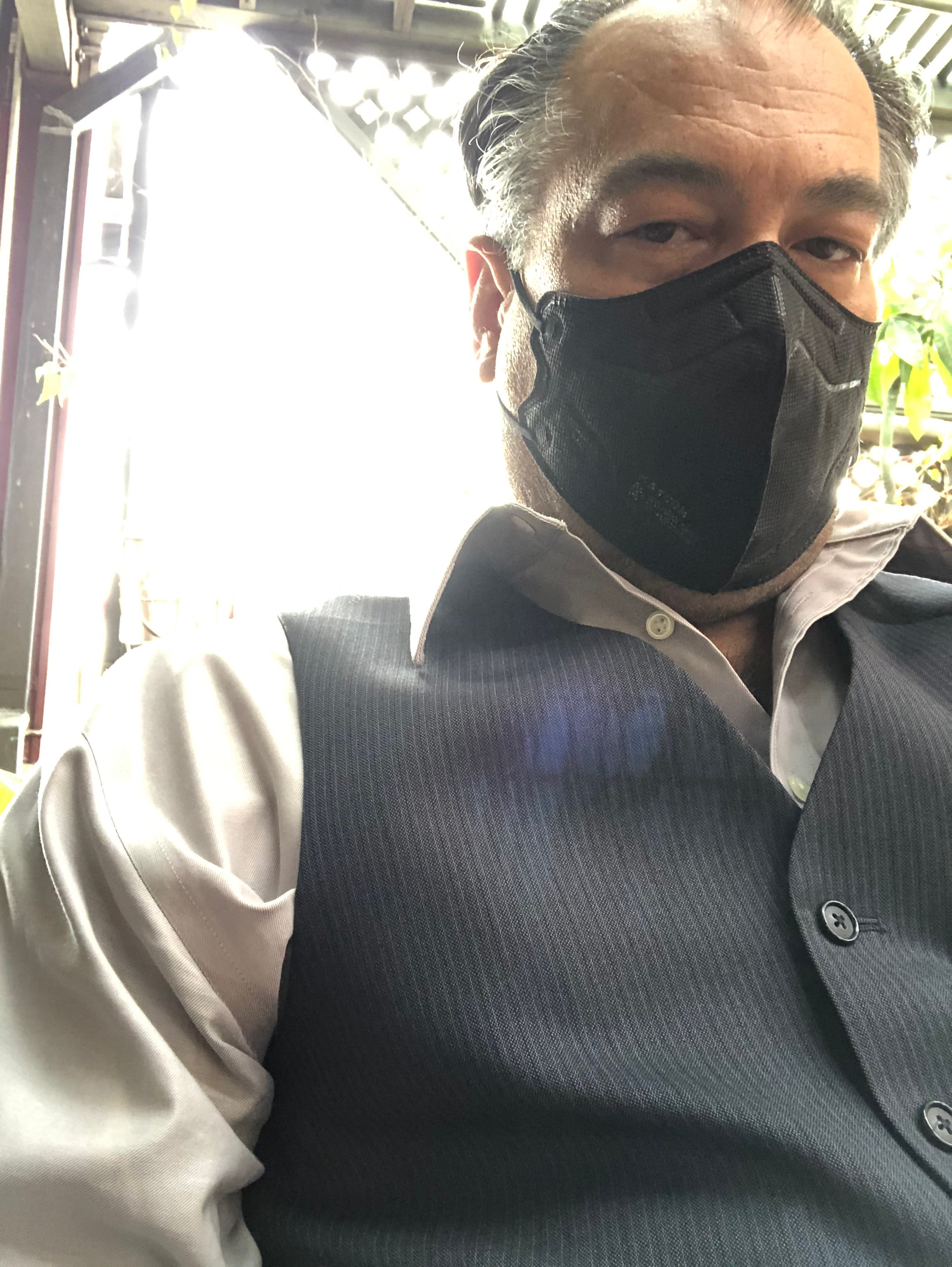
Bob, I don’t think I ever saw him with the mask on. We went through the protocol of what was required through production, but it wasn’t so strict to where it dampened the creative thing that was going on.
Another logistics question. This is not music being performed live. So are they blasting the recording through monitors in the room?
Yes, they had a PA system for playback. It would be at a good volume, not blasted, but like a live-venue sort of volume. They’d play that every time, and we’d go through it. Each one of the songs, we would listen to numerous times until we finished the spot.
Are you getting explicit instruction from Alma or anyone else, other than just seating you where you’re going to sit? “Do this, don’t do this, have this look on your face?”
Just basic. I mean, it might just be you sitting there with a drink. Nothing was too overthought. They might want you at a table with someone just smoking, watching the show.
There’s one song where you’re on screen the whole time, because it’s mostly one camera angle.
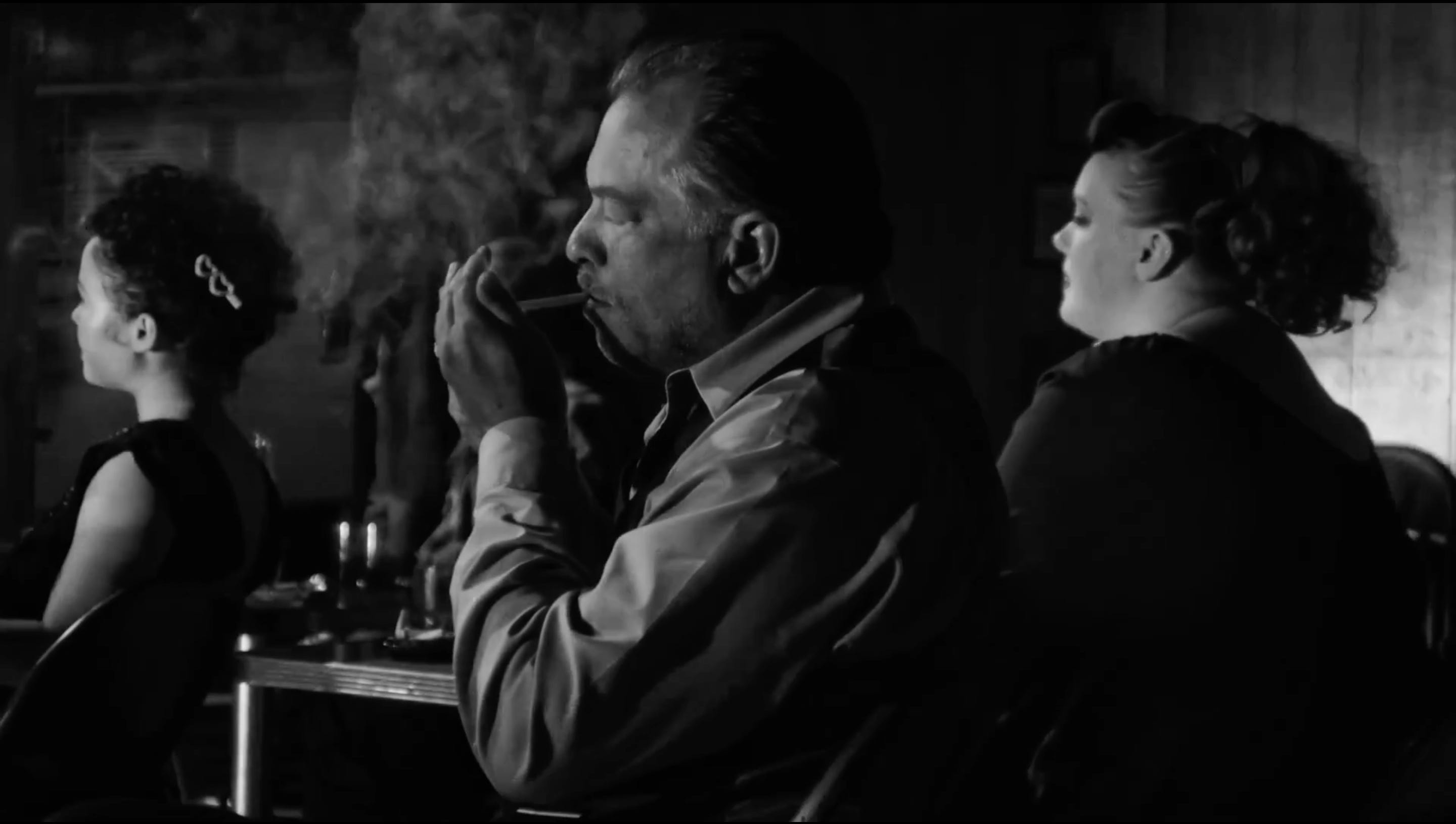
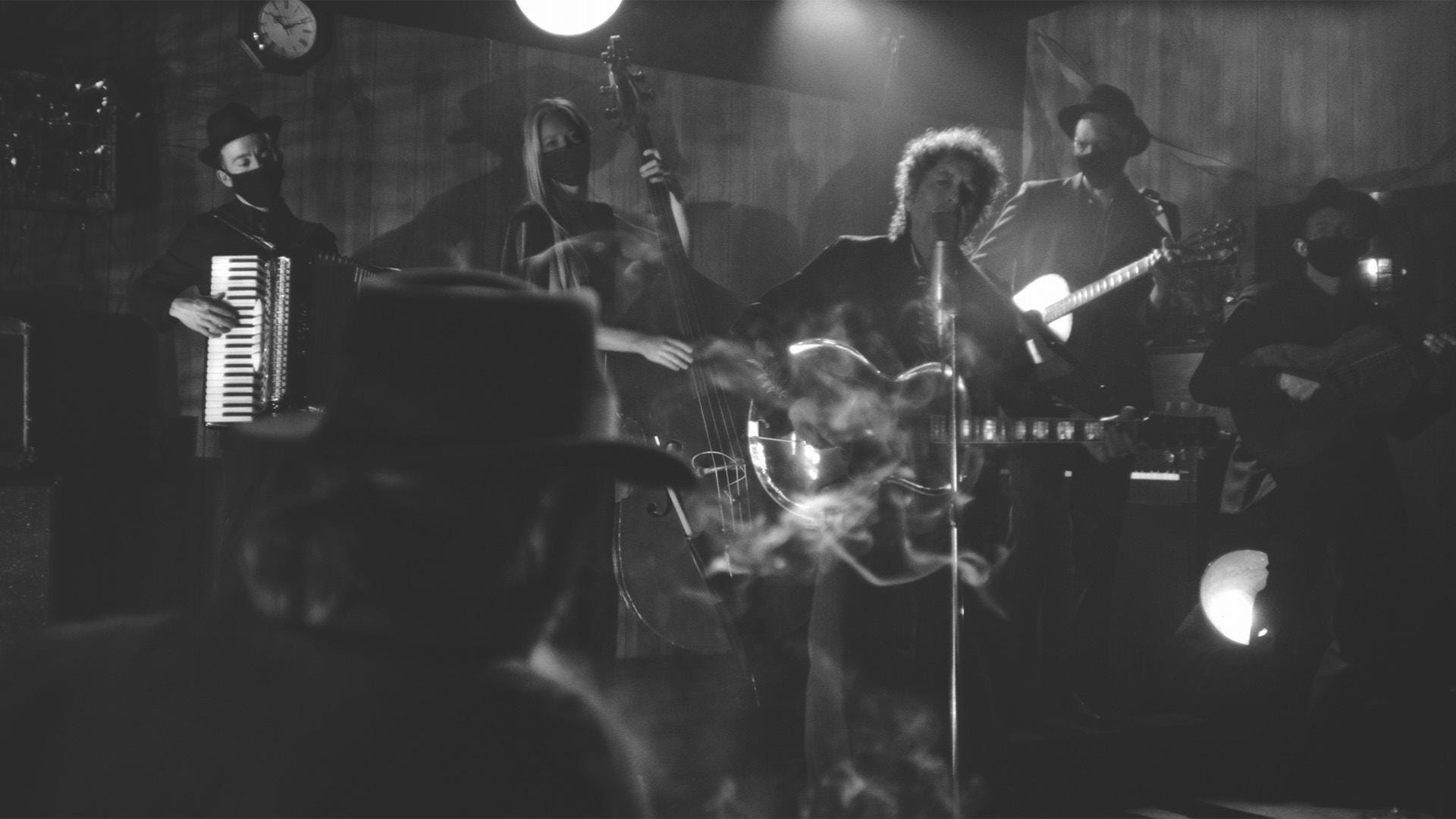
I’m smoking a cigarette. I’m in the back, and it cross-dissolves from me to Bob. I did get specific instructions from Alma because the camera starts on me, if I remember right. They did this camera move, but I noticed when they cut it together, they did a cross-dissolve.
It wasn’t like a free-for-all. “Hey, let me go out and start dancing.” We knew like, okay, I’m going to smoke this cigarette, and then I know the camera is then going to be off of me.
Real cigarette or prop?
They were these godawful prop cigarettes that honestly smell worse than a real cigarette.
There were a couple of songs where some people are dancing. I don’t know if that’s the whole cast or just certain people. Were you in those ones?
I was in one where they were dancing. I don’t think I ever danced. I want to say out of all the songs, I’m maybe in five of them. I know there’s a couple where it was just him and the band. Then there’s one where there’s him, the band, and two of the female cast. They did some things sans audience.
How much does a gig like this pay?
Oh, not much at all, Ray. Not much at all. As actors, we were paid a hundred bucks a day or something.
Listen, I would have paid them. It certainly wasn’t about the money.
Any other stories or memories that come to mind from the shoot?
Two years before this, I did a film called Twelve Mighty Orphans in Fort Worth, Texas. It’s a true story about an orphanage that started a football team. Long story short, one of the actors was Levi Dylan, Bob’s grandson. Levi and I became very close during the movie. It’s nice to be able to work with Levi, then get to work with his granddad.
Did you text Levi?
Of course I did. I said, “I’m working with your grandad. It’s really special.”
Craig Stark
Craig Stark is an actor from Louisiana. His filmography includes the Quentin Tarantino films Django Unchained, The Hateful Eight, and Once Upon a Time in Hollywood. Find him on Instagram.
Orba mentioned you knew Alma. Was that your connection to this thing?
Alma is an old friend. Alma was casting [her 2019 movie] Honeyboy. I asked her, or she may have asked me, if I could read opposite the people coming in. It was pre-COVID; people were still coming in live. From that job, they just made up that role in Honeyboy, where I’m in an AA meeting with Shia [LaBeouf].
So you weren’t even auditioning to be in the movie?
No, I was just the reader helping out. I wanted to keep my chops up because, you know, it’s an up and down career, acting. For me it’s been.
I’ll tell you that story in a nutshell. It started in the eighties with Marlon Brando. At the time, someone had crashed the gate at Marlon’s house and was on the loose. I had just turned 18 and gotten a job with Bel Air Patrol. What they would do is they would send you to a house, and they wouldn’t let you know who the client is. But when I got there, I soon found out it was Marlon. He walked down and greeted me. His neighbor was Jack Nicholson. I went to work for Jack and Helena Kallianiotes. I helped build a private club for them.
So you do this Honeyboy thing, you’re friends with Alma. How do you get the Dylan gig?
She called me up and asked me if I knew any real-looking people. So I sent her King Orba and my friend Raul [Cardona]. He had done La Bamba on stage. I met him on Quentin Tarantino’s Once Upon a Time in Hollywood. They were two real-looking guys. Alma loved them, and we were off the next week.
So then—you don’t want to ask me the inevitable question?
What’s the inevitable question?
Were we told not to look him in the eyes?
Were you?
They didn’t even need to tell me that, because you should never stare at a genius. Ever.
That’s why you can stare at politicians all day long. They gotta get elected. But Dylan’s real, you know? As real as real could get. I didn’t look him in the eye ever.
So what do you remember about the shoot?
It was great blowing smoke rings. Dylan walked by me once and, under his breath, I think he went, “Hey…Mr. Smoke Ring…”
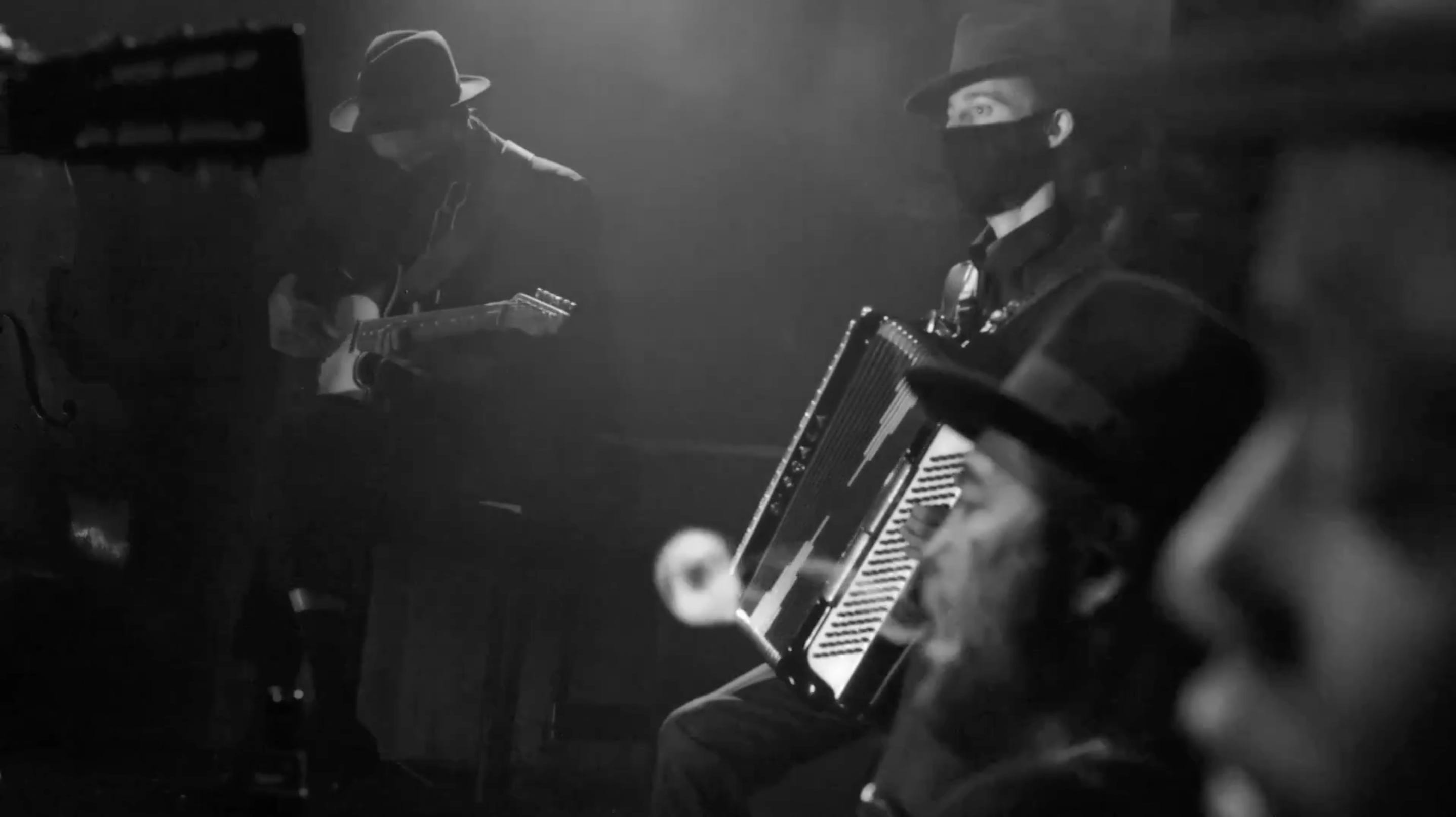
But I could have been hallucinating because, when I did that, I was trying to get sober. When you’re trying to get sober, those cigarettes just blow your brain.
Where did you learn to blow smoke rings like that?
That’d be in the bathroom in DeQuincy Junior High School. I don’t remember the year. I’m not disclosing my age, because I’m in an age-discriminative business.
How much instruction were you given by Alma or anyone else as to what to do?
I remember like just being lost in [what we were doing]. It’s the pandemic, the world’s ending, and I get eight jobs with Bob Dylan. Man, they could have bought me outside and beat me up and pissed on me and put me on fire. I was like in a trance the whole time. Because trying to get sober is just as bad as being fucked up. This is right out of the shotgun.
With Dylan, it’s like being caught up in something that is bigger than you, you know? My parents liked Dylan, and I got introduced to Dylan through the trip that I took on in the ’80s driving out here. Somebody had given me some Dylan cassettes. So that at the beginning, and this at the end.
I mean, you want to go up and say this to him, but I think that’s why the people that got hired got hired. They’re really pros. You don’t have to tell us twice. So you fight against it. Your body wants to do it.
Did you ever interact with him or talk with him at all?
I may have. I kind of blacked out with joy. There was one time he asked for a harmonica, and I almost jumped up like a little schoolgirl. Because I had one in my car. Maybe I said that, maybe I didn’t. I’m not sure.
This whole thing sounds like it was a surreal experience for you.
Right after that, both my parents passed.
It played recently in Santa Monica. I went to see it.
What struck you watching it again in Santa Monica recently?
How that was the last of my really care-free days, and I got to spend it with Bob Dylan and some good friends. These moments are what I’ll remember when I go teeter-tottering into antiquity.
Everybody was grateful because of what was happening in the world too, which was nice. I’m sure, like any set, maybe they had their problems behind the scenes, but to me, it flowed like melted butter on some beer onions.
The first guy who told me about you was one of the musicians, Alex, who played the accordion. He was like, “That’s Craig Stark, he’s in all these Quentin Tarantino movies.”
That’s my lifeline to inspiration—Quentin Tarantino, man.
How did you get connected with him?
I auditioned for Reservoir Dogs. I didn’t get the Tim Roth role. I auditioned for the guy jumping into the room and missing them in Pulp Fiction. Then I didn’t see Quentin for a long time. I get burnt out and I go out to the desert. I’m out there for a while, over a decade. Then I come back, and I think I’m going to try acting again.
The first film back was a film called Strutter. Quentin saw that film. I’m in Django, and then I’m in The Hateful Eight.
A pretty memorable scene in The Hateful Eight, too. [Samuel L. Jackson’s character makes him strip naked then eventually kills him. That YouTube link is censored but even the dialog is very NSFW]
I get a lot of mileage out of that. A lot of jokes down in the south, where I’m from, when I go back. If people here find out, they keep it to themselves here. Down in the south, they’ll let me have it.
Any other memories that jump out?
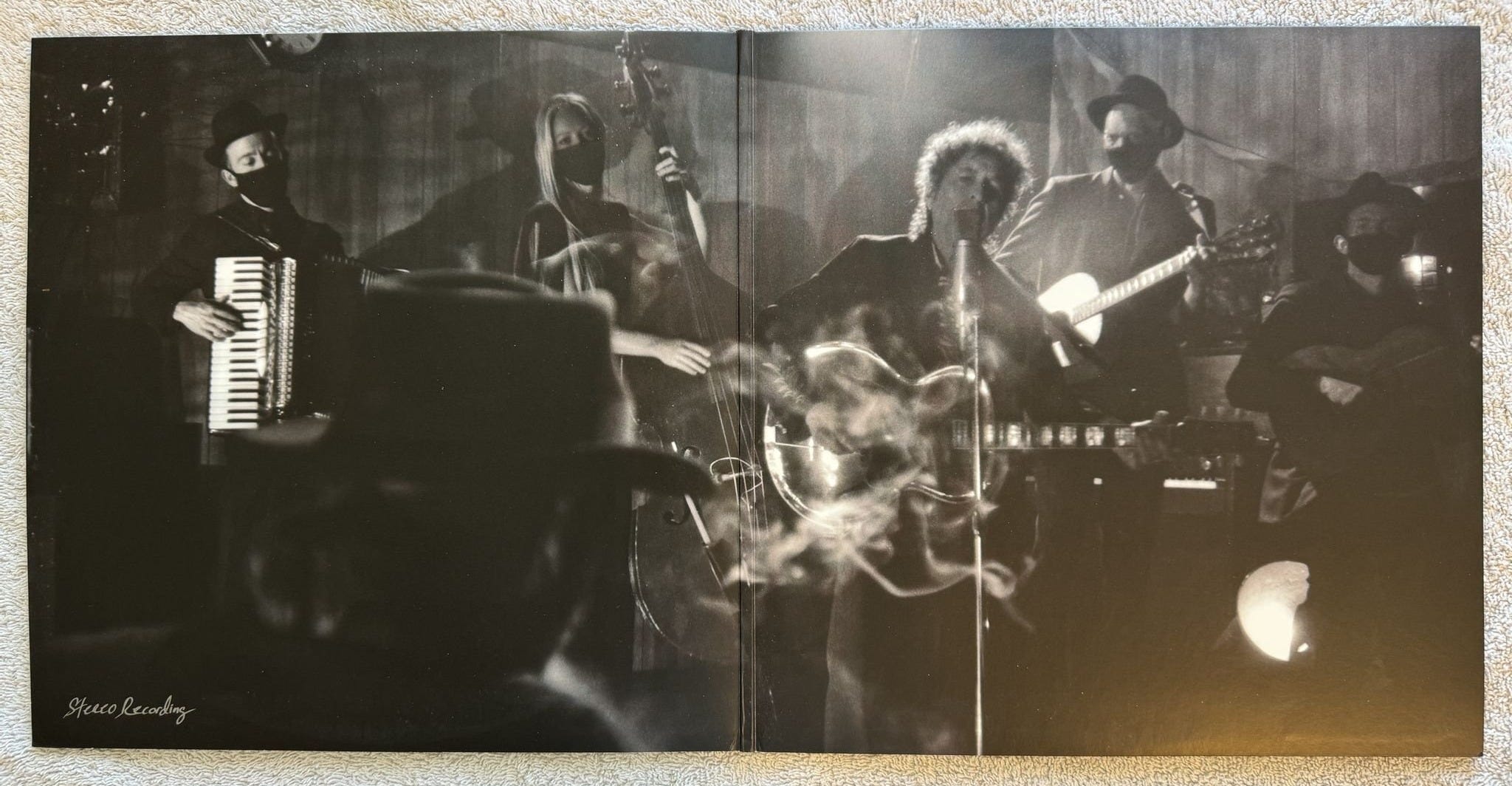
Alma had a New Year’s Eve party. She called me to the back room. She opened up the album that corresponds with the videos. She goes, “You made the Bob Dylan cover!”
And I am. I’m there. But it’s the back of my head.
I’ve done a lot of small roles. Every one of them is a blessing though. Getting to be able to do this for a living, I’ll never complain about it.
You know, I worked for Brando. There’s not too many people that capture his essence. Bob Dylan was the only guy that I’ve run into my whole life that’s got that kind of—it’s more than charisma. It’s a lack of bullshit. I think Marlon and Bob Dylan got little time for petty woes. Their heart has been open enough for the camera, or how they record music. They’ve given parts of their soul to us.
Thanks to King Orba and Craig Stark for taking the time to talk! For more Shadow Kingdom behind-the-scenes, check out my interviews with onscreen accordion player Alexander Burke and offscreen guitarist Ira Ingber.
Ray, you are fleshing out more for your Shadow Kingdom interviews…yaaay! I feel as though I am there.
Love the photo of the lucky socks! Still hanging on.