
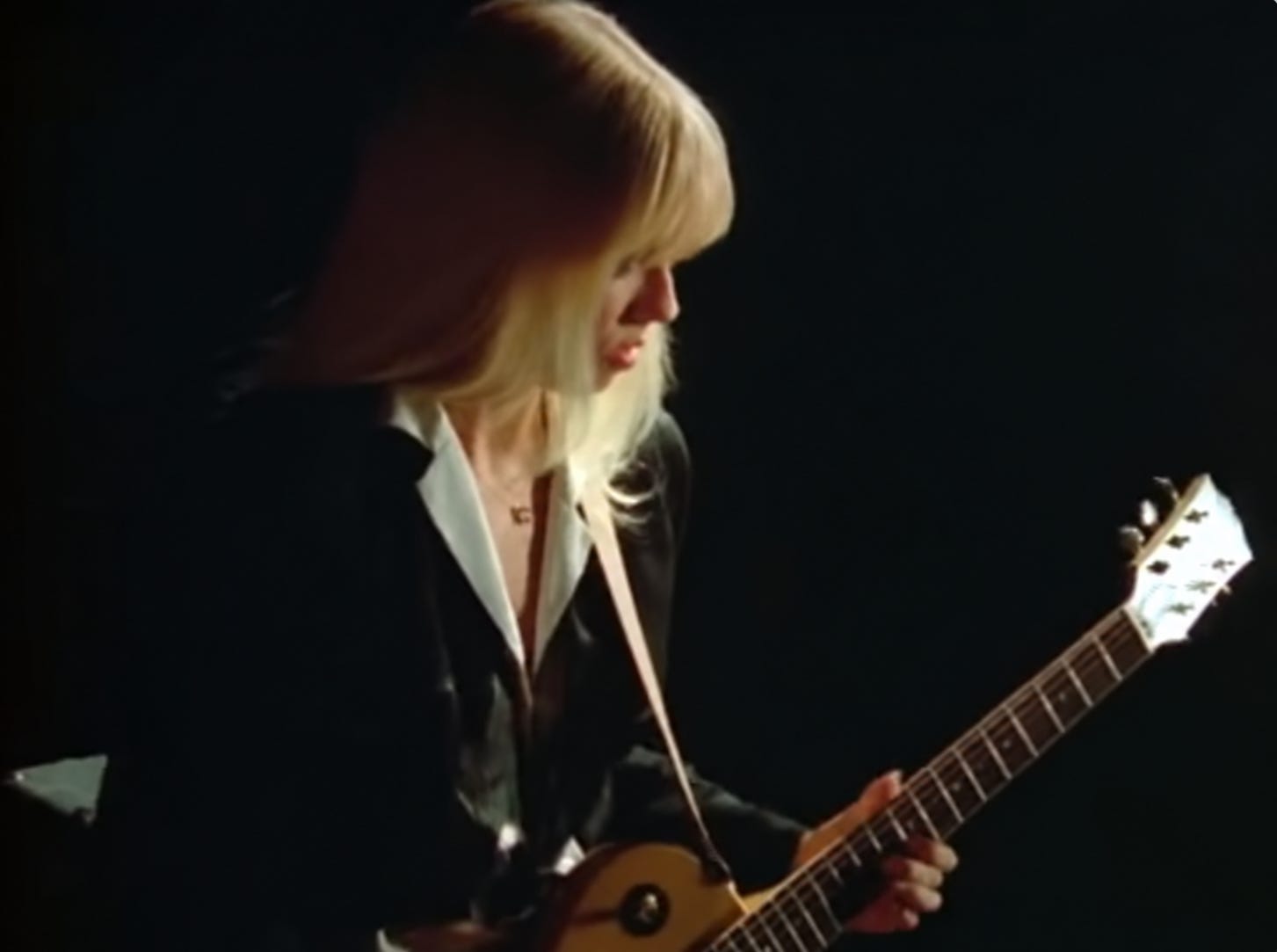
In 1983, a buzzy rock band called The Textones, fronted by Carla Olson, was playing much-hyped shows around Los Angeles and preparing to record their debut album. Through a twist of fate, Olson got invited to play in Bob Dylan’s first-ever music video, for the Infidels track “Sweetheart Like You.” She mimed the Mick Taylor guitar part from the recording, most memorably in a long guitar solo at the end.
She got close enough to Dylan that, not long after the video shoot, he offered her a few unreleased compositions to record for her album. She chose “Clean Cut Kid,” the Textones version of which (with a Dylan-composed bridge not heard anywhere else) came about a year before Bob released his version on Empire Burlesque.
Olson today releases her latest solo album, For Pete’s Sake, a selection of co-writes with the poet Pete Brown, lyricist for Cream songs like “Sunshine Of Your Love” and “White Room,” who died in 2023. A few weeks back, she told me the story of how she ended up appearing in the “Sweetheart Like You” video and recording “Clean Cut Kid” before Dylan himself.
How did you end up in the music video? I know you were just starting your career at that point.
Gary Shafner [Dylan’s assistant] had a company hired by everything from rock and roll to prize fighting to put up these giant posters all over LA. He did these giant posters for Bob, then he did giant posters for a company I was working at my day job, a marketing company called Macey Lipman Marketing that did promotion and marketing for artists.
Gary was in the office and he was pitching Macey on these giant posters to use for some of our artists. The next day I got a call from him. He said, “I used to go see your band a lot at the Troubadour. Bob Dylan’s doing a video right now. Mick Taylor played on the song, and I’d love for you to be in the video.”
He said they were going to do the video in two days and left me a cassette of the song. I went home and learned it.
Do you know why Mick himself wasn’t in the video?
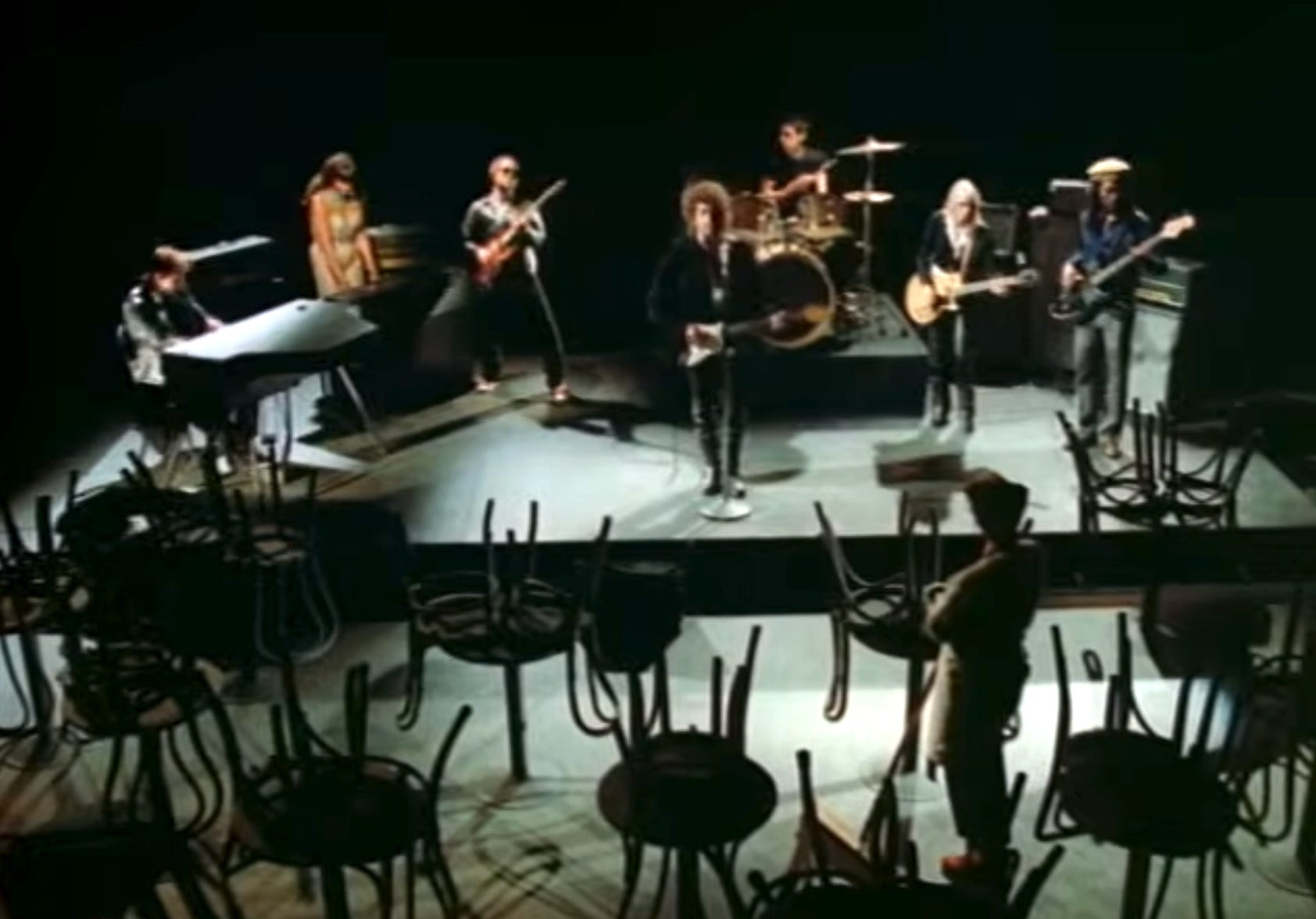
He was back in England. Mark Robinson, the video director, wanted to have like a world music band. He had a reggae guy, he had a punk-rock keyboard player, he had me playing lead guitar, and Charlie Quintana, who was in The Plugz [the band that backed Dylan on Letterman a few months later], playing drums. There was an additional drummer who was called in, B.J. Wilson, who was in Procol Harum. But they didn’t use him.
When we went to cut the video, it was on the same warehouse sound stage where they filmed Jailhouse Rock. The set was still there. You could go in and slide down the pole if you wanted to. It was a wonderful 23 hours in leather pants.
It really took 23 hours?
23 hours! They originally had a story with the woman who’s sweeping up. She was the sweetheart. There was a couple sitting at a table by themselves, an overhead light on them, romancing. That was Mark’s idea. Bob didn’t like it. So he took Mark out into the trailer and said, “Let’s just do a performance video.”
When I first got on the set, Gary said, “I want you to meet Bob. Just remember, don’t look him in the eye.” I went, “Well, okay.” He says, “Bob, I want you to meet Carla. She’s going to play guitar in the video.” Bob stuck his hand out and he went [nasal whine], “Ehh, nice to meet you.” I grabbed his hand and shook it real hard. He didn’t pull away, but he almost winced.
The sound stage was high enough for them to put a Titan crane in there. You see when the camera moves across, it’s sometimes moving from overhead. I had to stand on two apple crates, because I was too short for the crane to catch me. In the movie business, they used to call those the Alan Ladd boxes. He was an old 1950s movie star, and he was a little guy while all his leading ladies were tall. I’m literally teetering on these two crates.
Clydie King, she’s up there singing what she thought were background parts, but there really weren’t any background parts, because the song didn’t have any. She was humming along.
Did you have any interactions with her?
Yeah, she was very sweet, very shy. Once again, Bob was in transit. He was moving 90 miles an hour. He was with Clydie, and then a woman from Elektra. I mean, he liked to cat around, you know? I didn’t want to go out with Tony Marsico and those guys at Bob’s house, because it would have not looked good.
What do you mean? While the Plugz were up there jamming with him for months? [Read that story here.]
I was invited to come out to Bob’s house and write with him, and it just felt wrong. Maybe I was scared or something.
So he actually invited you there to write?
That was my understanding. I don’t know what my invitation was really for. It was probably just, you know, a playful invite. And that’s fine. But at the time I was engaged to my manager.
Who else do you remember on set?
Poor Steve Ripley was standing in the back and he didn’t know the song. He did not get the music ahead of time. So when it came to the end with the solo, the camera stayed on me because I was the one playing the guitar licks. There was one lick in there that I fudged. The rest of it I played. I mean, pantomiming, but they were the actual notes.
When they went to look at the playback, we were sort of dismissed to go off into the corner. My husband Saul, who was the manager of the Textones, was watching Bob watch the playback with Mark Robinson. Bob goes, “What about switching over to Steve?” Saul says, “Steve doesn’t know the song. She knows the song.” That’s how I ended up with that 32-second cut.
I was watching the video before we got on. It’s a long shot on you there at the end.
Changed my life. I mean, it really did, because when the video came out, it was debuted on MTV. They used to have these “world debut”s where they would run it many times a day. And when it got to the solo, people would see me. And, of course, my Les Paul. A lot of people knew me for that guitar.
What are you doing for 23 hours? It seems like a fairly simple music video.
It was actually kind of cruel because in the dressing room, which was upstairs, there were no chairs. We just sat there on the carpet. There was a makeup woman who curled part of the front of Bob’s hair, which I think he was not particularly happy with.
Oh, and the white shirt! Bob was wearing a black leather jacket and Mark Robinson was wearing a white shirt. Bob wanted to swap. That’s an old Bob thing. He likes to swap clothes with people.
From my Gregg Sutton interview:
He gave me a black motorcycle jacket, so I gave him a white leather suit jacket that I had, which he really liked. I would go in there, trade clothes with him.
Are you guys the same size, trading clothes all the time?
Yeah, absolutely the same size, and we had very similar tastes. He’s always been a very well-dressed man. Of course, he can pay anything for his clothes, but he liked the way I dressed.
Once they got settled that it was going to be a performance video, I think we did it maybe twice or three times through so that they could cut different cuts.
Are they blasting the song over and over through a PA?
Everybody was pantomiming. Bob was trying to pantomime, but he never sings it the same way twice. I mean, his timing is completely different. I think he was intimidated by his first lip sync. He had never done a lip sync. Not on TV, nothing.
Of course, that shoot is how I met Mick Taylor.
Tell me that story.
Okay, so the video’s in ’83. The Textones’ first album [with “Clean Cut Kid”] came out in October of ’84. Then in ’85, we were playing gigs around LA.
’85 was after Real Live, when they did the European tour and did that album. I heard that as a double album before it came out. It was a 90-minute cassette that we had for a few hours that David Braun brought to the office where I worked. It came out as a single album. Gregg Sutton was playing bass on that tour.
Gregg and Mick and Bob came down to our gig with Dave Alvin and his band The Blasters in Santa Monica. They were sitting in the back, unbeknownst to us. I was playing slide guitar on a particular song. I’m a terrible slide player. Mick went, “Oh look, she plays slide.” And of course, Mick’s the greatest slide player in the world.
Mick somehow got ahold of me and said, “I’d love to record with you any time that you would want to do it.” So we organized something. It was a few years later, but that was how I met Mick Taylor, through Bob.
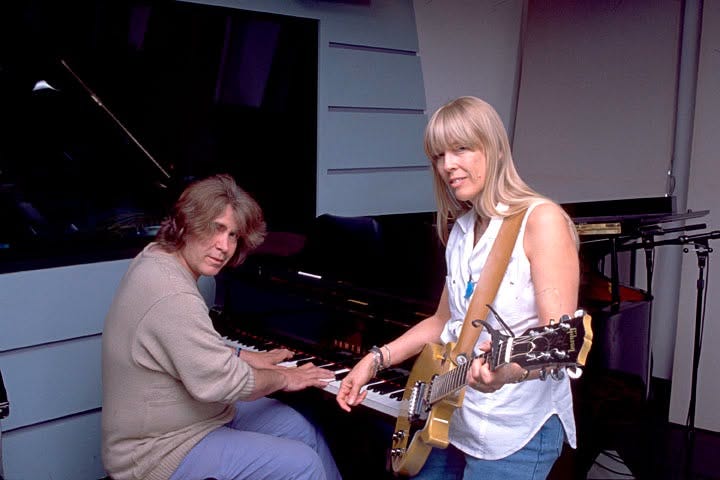
They were recording [Empire Burlesque] in Hollywood at Cherokee Studios. I happened to be in the next day recording something for a movie soundtrack, and we were dropping off equipment. It was wintertime; I remember it being cold. Saul went in with an amp and took it into the lobby. Bob was standing there. He says, “Is Carla with you?”
So he comes out to the car, and I’m sitting there with an old fuzzy hat on. It’s midnight, and there’s Bob knocking on my car window. “Hey, do you have your guitar? Why don’t you come in and play on something?”
We parked the car, I came in, went to Studio C. They were already doing overdubs and some preliminary mixing. Well, I was there ‘til five in the morning, and they still hadn’t gotten to me. So I just begged off. I said, “I’d love to do this, but I work a job and I have to be there [soon].”
So you’re basically just sitting there twiddling your thumbs for five hours?
I was talking to Bob’s roadie, this guy named Charles Rook. Charles worked for Tom Petty, and we became very close friends. People would say to me, “You look just like Tom Petty.” I played a Rickenbacker, just like Tom. Mine was blue; his was red.
I read about another show that Bob attended that you did at the Palace with Lou Reed and Lone Justice.
I didn’t know he was there.
Apparently he attended at some point, but ducked out early.
It was called “Rock of the Eighties.” That was the TV show.* When they finished with us, they were filming Lou Reed—not for the same show—and they were filming Lone Justice. He was probably there to see Lone Justice.
[* Fun fact: The show was actually called ‘MusiCalifornia’ (“Rock of the Eighties” was one episode title) and another artist performing on the same episode as Carla was a young Charlie Sexton! I can’t find video of that episode online, but here’s the episode with Lone Justice and here’s one with The Plugz.]
You and Lone Justice both around the same time got unreleased Dylan songs to record. You cut “Clean Cut Kid” before Bob released his version. They recorded “Go Away Little Boy.”
I got the cassette from [Dylan manager] Jeff Rosen. He sent me “Clean Cut Kid,” which was a skiffle version with Sly and Robbie, and “Mozambique” and I think “Isis.” I didn’t want to do “Isis,” and “Mozambique” didn’t seem to be up my alley. So I just said, “I’d like to do ‘Clean Cut Kid.’”
Wait, so the other two songs they sent you were old songs? I mean, those were both out on Desire already.
I know they were, but I think these were alternate versions. I might still have the cassette. But when I got “Clean Cut Kid,” I thought, “Well, that’s a shuffle. I’ll change that to like ‘Crazy Mama’ by The Stones.” And that’s what I did.
When we were going to cut the track for it, I got a call from Bob. Bob goes, “Hold on. I have a bridge.” Because there isn’t a bridge in the song. It’s just verse, chorus, verse, chorus. So he sends me the music to what would be a bridge. He goes, “Write some words.”
So I wrote the words that I thought were appropriate. We were cutting the track, and I got a call from him in Paris with him saying he had the lyrics for the bridge. He said, “Sing whatever melody you want, but here’s my words.” So scratch my words. No problem. But the melody that we recorded in the bridge was mine.
Did he ever hear your words?
No. I’m sure that he was on the road and he just thought, “You know, I’m gonna finish this song.” When he cut it on Empire Burlesque, it was more of a shuffle rather than what I came up with, a straight-ahead rocker.
Bob didn’t even end up using the bridge on his own version, which is funny.
No, he did not.
The bridge Dylan wrote for the Textones version:
The last time I seen him
He had a smile on his face
Laughin’ at nothin’
He wanted to go to my place
You get this cassette with some alternate version of “Isis” and “Mozambique.” I also saw reported at the time that you had maybe been given two other unreleased songs, “Neighborhood Bully” and “If You Gotta Go, Go Now.” Do either of those ring a bell?
Yeah, they ring a bell. We also got a version of “Foot of Pride” and “Blind Willie McTell.” I wanted to cut “Foot of Pride.” He said, “It’s not finished.”
Did you have any other overlaps or interactions with Dylan after the whole “Clean Cut Kid” thing?
One time I went to see Johnny Rivers. He was doing a 20th anniversary at the Beverly Hills Theater, and Clydie King was singing with him. Bob was still involved with Clydie in some way. Bob saw me and started talking. He was just in the audience, standing at the bar.
Actually, I think that was before “Clean Cut Kid” was cut, because he was telling me he had this song idea. He was kind of humming along. Then this guy walks up to him and goes [panting], “Bob, I’m your greatest fan!” And Bob says [sarcastically], “You are, are ya?” The guy just kind of melted.
I’ve seen him a lot live. We saw him at the El Rey in the late ’90s. Todd, my partner on this new album, was playing with Sheryl Crow at the time, and Sheryl was opening for him. Gregory Peck was there. He was sitting in front of us. And Fiona Apple was sitting next to us.
Bob should have done “Brownsville Girl,” with the line about Gregory Peck.
When Gregory Peck stood up to leave, he was so tall, he had to stoop to get under the door.
Thanks Carla! Buy her new album ‘For Pete’s Sake’ at Rough Trade or stream on Spotify or wherever you get music.
I don’t remember Real Live being rumoured as possibly being a double album…it would have made a lot more sense than what we ended up with…
Always great to read about those behind the scenes moments. All of this was new to me. Thank you, Ray, for the great detective work. I’m hoping you are able to follow up with Carla and see if she actually has alternate versions of “Isis” and “Mozambique.” That would be another major scoop like those 1976 soundboards you found:)