
Flagging Down the Double E’s is an email newsletter exploring Bob Dylan performances throughout history. Some installments are free, some are for paid subscribers only. Sign up here:
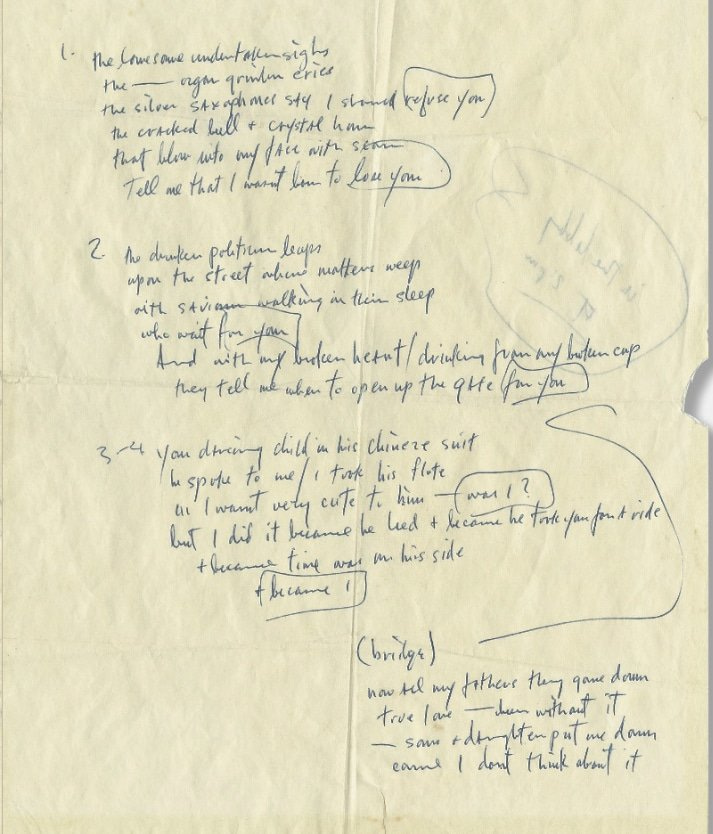
In 2015, the Bob Dylan office was preparing to sell his voluminous private archives to the George Kaiser Family Foundation in Tulsa. But how much were the Bob Dylan archives worth anyway? We’re talking thousands of pieces of handwritten paper—lyric drafts, notebooks, random scribblings—not to mention days and days’ worth of audiotapes and all sorts of other things Dylan hung onto over the decades. How do you put a price on that?
They called Jeff Gold. Gold is a longtime rare music collector and dealer who runs Record Mecca. Before that, he spent decades working for major labels like A&M Records and Warner Brothers. The Dylan office knew he was the man to figure it out.
I recently interviewed Gold about all his work for and about Dylan. We got to his months of work appraising the Bob Dylan archives eventually, but before that, we spoke quite a bit about the world of Dylan collecting in general. What’s rare? What are some of the coolest things he’s come across (if you’ve ever listened to the Brandeis 1963 live album—he’s the man who discovered those tapes)? How do you spot fake Bob Dylan signatures?
Here’s my conversation with Jeff Gold…
When did you first see Dylan?
I never thought I’d be able to see Bob Dylan, because he was, as far as anyone knew, never going to tour again. Then he announced that tour with The Band in 1974, and I was so excited. We bought tickets, and I remember calling my brother during the intermission and saying, “It’s horrible. He doesn’t sound like the records.” I was crushed.
That’s funny in retrospect since, compared to some other tours, that tour isn’t that far from the records.
Yeah, but imagine, I was 18 and I was such a huge fan. We had nerded out over these bootlegs and these records so deeply, and we were used to going to concerts and people played their songs exactly like the records. And that wasn’t.
My wife, who’s older than me, saw him in ’64, and met him, and so she had the real deep experience. But for me, it was a total bummer. I wanted to hear it like the records.
How did your wife meet him?
She used to hang out at Izzy Young’s Folklore Center when she was 14. Just a kid. Izzy Young, as she tells it, used to take advantage of all these girls who used to hang out at the store. Like, “Come clean my apartment.” And they would do it. She never did though.
One day, he said, “You’re into Dylan, right? Come tomorrow at three o’clock. He’ll be here.” So she came, and Dylan and Izzy Young were in the back room in the middle of a conversation. He motioned for her to sit on the floor. She sat there while they completely ignored her for half an hour.
She was so uncomfortable that she got up and left. She walked outside, and Joan Baez was window-shopping at these stores where you could buy hippie earrings and silver jewelry. It was like Dylan had parked her outside.
I know you met Bob too back in the day. When did that happen?
I was the first employee of Rhino Records. When I worked at Rhino, we had a subscription to Billboard magazine, which I devoured. And I read Dylan was going to go to Japan for the first time.
This is for Budokan?
Right. So sometime in 1977, I’m eating at this place I’d eaten at hundreds of times called the Brentwood Country Mart. It was a place from my childhood with 25 different food stands and shops. I’m sitting there minding my own business, eating a chicken basket, and in walks Dylan with maybe three of his kids. He’s wearing a leather jacket with really messy, stringy long hair. They go into this toy store.
I am freaked out. I’m thinking, “Do I have time to go to my house and get an album to get signed? No.” So I go into my car and get a piece of paper and a pen to get his autograph. My heart’s beating a mile a minute. I can’t believe my hero is here.
He’s in this store for half an hour. Then he walks out and he has a kid’s twirling baton, which I theorize he’s bought as a birthday gift for some party his kids are going to. It has a little bit of wrapping paper and ribbon around it.
I go up to him and I say, “Excuse me, Bob. Could I get your autograph?” I hold out this pen and piece of paper. He kind of meekly holds out this baton and goes, “I can’t sign.” You know, like “I’ve got something in my hand. I can’t sign this.”
I go, “Well, I’m really sorry to bother you. Your music has meant so much to me all my life.” Something like that. And he goes, “What’s your favorite song?”
I said, “‘Like a Rolling Stone,’ because Tom Wilson’s production, and you’re going from acoustic to electric…” Demonstrating that I know more than somebody just asking for his autograph. And I said, “You’re going to Japan.” He goes, “How do you know that?” I tell him “I work at a record store, and saw it in Billboard.”
We chat for maybe five minutes. His kids are running around. He’s friendly. At the end, I offer this piece of paper and a pen [again]. And he holds up this thing and goes, “Sorry, gotta go” and leaves.
It’s so ironic that now I have many signed things, but I got my five minutes with Bob, which was much more valuable to me.
Given that you’ve subsequently done all this stuff for his office, was that the only time you’ve actually met the man himself?
Yes.
We’re about to skip forward decades, but during your previous life as a label head, was there any Dylan connection? He wasn’t on any of the labels you worked at.
Indirectly. Years ago, my former boss at Warner Brothers, Mo Ostin, was getting inducted into the Rock and Roll Hall of Fame. They wanted his archives. He said, “Do I have any archives?”
To make a long story short, he did. They were in these files in this giant warehouse. Going through them, I found some correspondence back and forth from Mo to other people at Warner Brothers about potentially signing Dylan. Probably when he went to Asylum [in 1974]. They had gone deep, seeing how much they could pay and doing some level of negotiation with Bob’s people, but obviously it didn’t come to pass.
So you have this whole label career for many years. How do you get into what you’re doing now? Collecting, dealing.
I started collecting records probably when I was 14, riding my bike to used record stores and going to Salvation Army stores and things like that. As I got a car and could drive, I upped my collecting. I would see stuff that I knew was valuable but didn’t interest me, so I would buy it and sell it to buy things I wanted.
Then when I was 19, I went to England for the first time. I had met some record collectors there via the mail. I started bringing a suitcase of rare American records to England, trading them for rare English records, bringing them back. I was the first person I knew doing this, and I was making a relative fortune for a young person doing this once or twice a year.
I eventually finagled my way into the record business. I was one of the few people who knew a lot about records in the record business, crazily enough. That got me far, meeting artists and being able to talk to them in depth about their past careers. I continued to buy rare records for myself. Whenever I traveled, I’d build in an extra day or so to go looking for records.
When I left Warner Brothers in 1998, I had a contract stipulation that reduced what they owed me if I went to work for another company. But I could do entrepreneurial stuff. So I just got right back into it. Without wanting to sound like I’m bragging, I was one of the first people in the music business to grasp the internet and helped Warner Brothers become the first record company with an online presence. When I left, eBay was just beginning.
It was going to be my retirement business, and now it’s kind of my out of control retirement business.
Do you remember the first Dylan thing you bought or sold?
Probably nothing that significant. But here’s a story. I had been searching forever to get a copy of Freewheelin’ with the four unreleased tracks. I always would put it in my catalogs, my advertisements. “I will pay a really high price for this.”
It took me about five or six years. Eventually somebody showed up with one. I traded him an album worth $700 and $400 on top of it. I was so happy. I’ve sold maybe five since then, but I still have that copy.
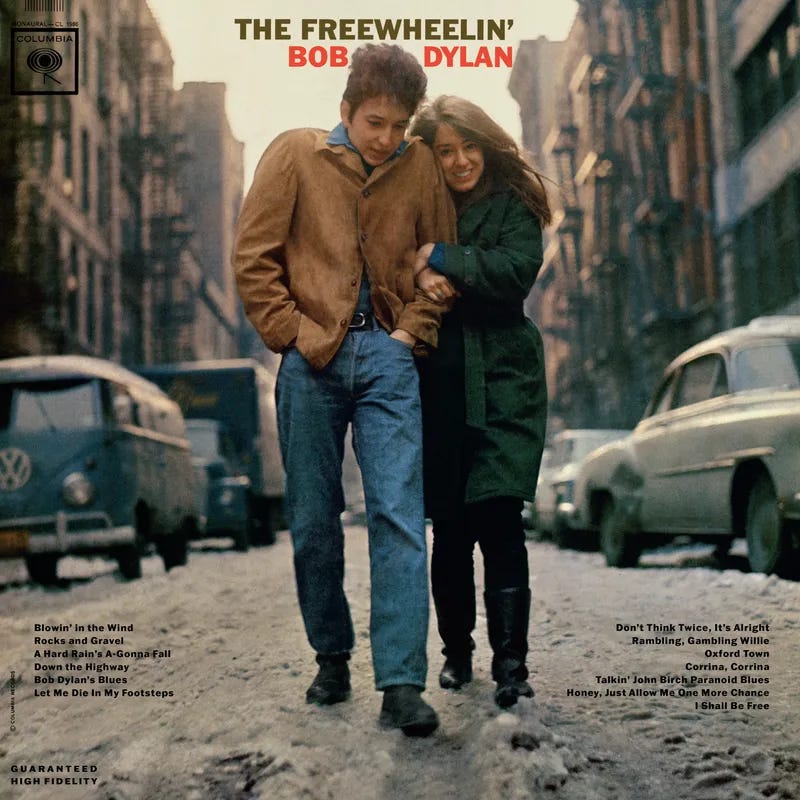
I know that Dylan changed four tracks on Freewheelin’ last minute, but I don’t know the backstory. How did this early version get so far along that they literally pressed these incorrect copies? [Note: See original Freewheelin’ track listing here]
Nobody knows, but here’s my informed guess. They do Freewheelin’, they sequence the album, they cut masters for it and make parts. Then Dylan shows up with the four replacement tracks. Tom Wilson says, “Jeez, these are so much better. We’ve got to cut these.”
I think somebody just got confused with which stampers to use. They had pressing plants in Santa Maria, California, and on the East Coast. As far as I can tell, every copy that’s shown up was bought in California. Then they figured it out, recalled the records, and a few didn’t get fully sent back.
That’s the same one they just turned into a Record Store Day release?
Yeah, which they did from my copy, essentially. Steve Berkowitz, who I’m friendly with, called me one day and told me they were going to put it out for Record Store Day, and they had all of the masters, but wanted to make sure they used the correct takes. He asked if I could tape my copy for him. There was a tight deadline, so that day I had to tape them for him and send the files so he could be sure he used the right versions.
I bought the archives of Gloria Stavers, who was the editor of 16 magazine, and into Dylan from the very beginning. In those archives were the liner notes for the original version, with the four pulled tracks, which I had never seen anywhere. I told Steve that I had these and that they should use them, because that would make it another really attractive thing that nobody had ever seen. Somebody from Sony got in touch with me and I made a deal for them, and that’s how they ended up on the back cover.
I’m a fan before I’m a dealer, by far. I was very excited that it was finally being released, especially with the unknown liner notes.
In a situation like this, where there’s a reissue, does that affect the value of the originals?
I don’t think so. The originals are worth so much money that anybody who wants it is a very serious collector. It’s not an itch that a reissue will scratch.
What are the most valuable Dylan records?
Well, there are somewhere around 15 mono copies of [the original] Freewheelin’ that have shown up, and there are three stereo ones. Then a friend of mine recently got one that nobody had ever heard of, that had the rare tracks on one side, but not on the other side. So that’s the rarest, but less desirable, I would say, than a stereo with all the tracks. For some reason—this is really inside baseball—the stereo version of the Freewheelin’ with the withdrawn tracks lists them on the labels, while the mono doesn’t.
So this Freewheelin’ thing we’ve already been talking about, that’s the number one, most valuable, most sought-after record or tape?
The stereo one, yes. There are one-off acetates that I’ve had and sold.
When you say acetates, what exactly does that mean, and what sort of Dylan acetates have you had?
It’s a pre-production proof of concept, if you will.
The way the production process of a record works is as follows: An artist goes in and records the song, at that point on analog tape. Then the multi-track tape gets mixed down to, in the case of stereo, two tracks; in the case of mono, one track. Then a one-off record is made, which is called an acetate. For that, they play the master tape and a lathe cuts a copy of what the record will be, by etching grooves into a disk that has an aluminum core and is coated with lacquer. That’s an acetate.
It’s very expensive to do. Generally, one of those will be made for the artist, maybe one for the producer, and maybe one or two more for management and the record company.
I bought some acetates that had belonged to John Hammond. He would have the two or three choices he had for each song cut on an acetate. So he could take it, play it at his leisure on a record player to decide which version he wanted. Because you don’t want to be playing master tapes multiple times. The idea is you want to make sure everything’s exactly the way you want it before you start producing hundreds of thousands of records.
You uncovered a bunch of acetates from Dylan’s work with producer Bob Johnston, right?
That was a little more involved. Bob Johnston’s in Nashville; Bob Dylan’s in New York. Bob Johnston’s recording Dylan, going back to Nashville, doing some overdubs on the tracks, sequencing it, and sending these to Bob. Bob Johnston is proposing what he thinks makes sense, and Bob Dylan is writing on the sleeve the changes he wants—“Take off background vocals” or “Make the bass go down”—and changing sequences. I think Dylan’s calling Bob Johnston and giving him these notes. Then Bob Johnston’s cutting a new acetate with Dylan’s changes and sending it to Dylan.
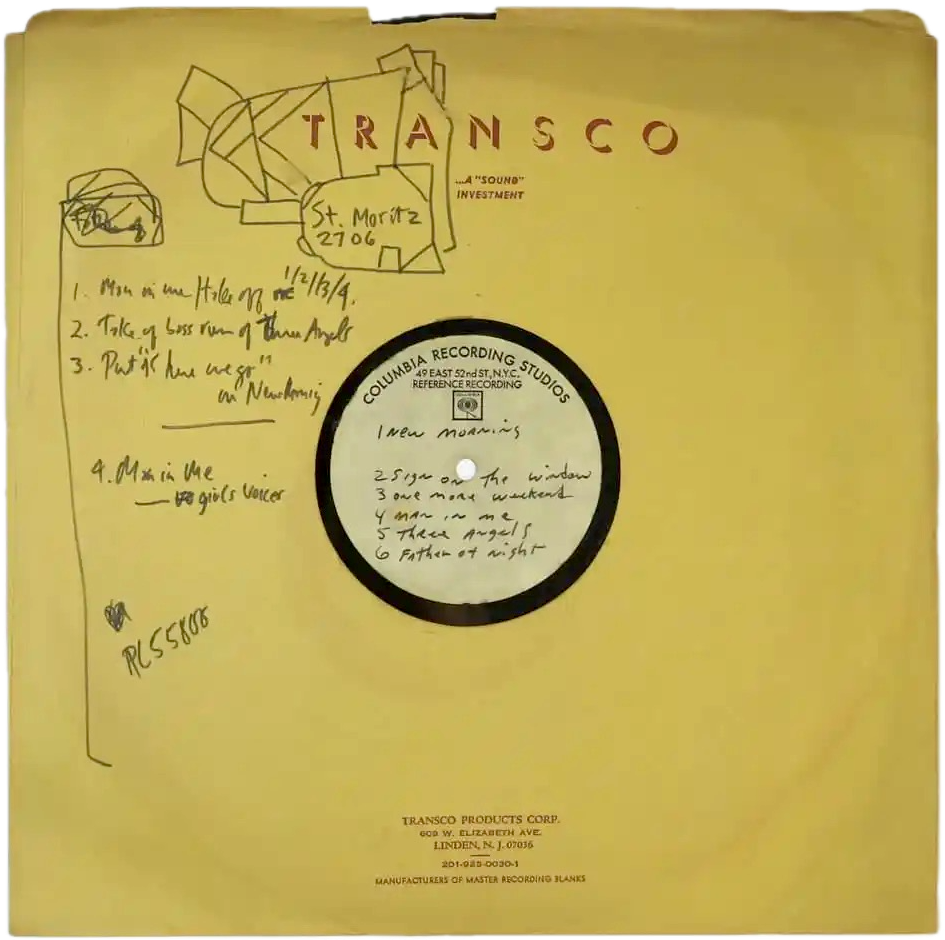
What albums are we talking about?
New Morning and Self-Portrait. There were 149 acetates. Some of them were single tracks. Most of them were one-sided LP sides.
How did these come to be in your possession?
There was a woman and her husband, who were avant-garde architects. Their life’s work was trying to figure out how architecture can extend lifespan. They had bought a building on West Houston Street in New York to live and work in, renting out floors they didn’t need.
They both died, and her brother had to clean out the house, sell their furniture and books, and throw away what needed to be thrown away in order to put the building on the market. In doing so, he found two boxes marked “old records.”
He had known that Bob Dylan had rented the bottom floor at some point in the late '60s, early '70s. Didn’t know anything more about that. What he saw [in the boxes] were things that looked like records that weren’t in album covers, but were in paper sleeves with names or information written on the labels in hand. They were all Bob Dylan, but he didn’t know what they were. He theorized that when Dylan moved out, he’d either left them or he’d thrown them away, and his sister saved them.
He lived in Seattle, so he went to the Experience Music Project to find out what these were. They tried to get him to donate them. He said, “I’m the executor. I have to sell them.” The guy who he saw was a friend of mine. He said, “Call this guy, Jeff Gold.”
So I spoke to him. He said, “They’re in New York. I gotta get rid of them right away. Are you interested in buying them?” He sent me pictures of a couple. I said, “It depends on what they are, whether there’s anything unreleased, what the condition is. If I’m going to fly to New York, I’d like to be the only person you’re talking to. I’ll make you an offer, which obviously you’re not obliged to accept, but I just want to make sure that I’m not flying to New York on a wild goose chase.” And he said, “Come on down.”
So I went. I brought boxes, a hand cart, and a light to inspect them. It was obvious this was a motherlode pretty much instantly. They were all in great condition, they had a lot of Bob Dylan handwriting. So I made him a very generous offer. He accepted, we walked around the corner to the bank, and I was on my merry way.
Are you allowed to say how much it was?
I want to be discreet, but it was many tens of thousands of dollars.
I knew this was going to be a big thing in the Dylan collecting community. And I knew that it was going to take a long time to figure out what these actually were. I was going to have to listen to them and A-B them against other things. So my assistant and I spent about three months photographing everything, listening to everything. Figuring out what was alternate, how it was alternate, what these actually were.
What ends up happening to the acetates after you’re done cataloging them?
I kept the best ones and sold a bunch of them over many years.
Was Another Self Portrait already out? Were some of them used for that?
This was long before that. I called [Dylan manager] Jeff Rosen and told him I’d found these and provided them with transfers of everything. But they had access to master tapes for all this stuff too.
So Dylan’s office had some version of all these recordings already, is what you’re saying?
Yeah. They may not have had some of these mixes, but they had all the master tapes.
We’ve talked most about records, but what valuable or interesting Dylan paper stuff have you come across? Letters, lyrics, etc.
My favorite things that I own: I have a lyric manuscript to “I Want You,” a very early lyric manuscript to “Absolutely Sweet Marie,” and I have the final manuscript for “This Wheel’s on Fire.”
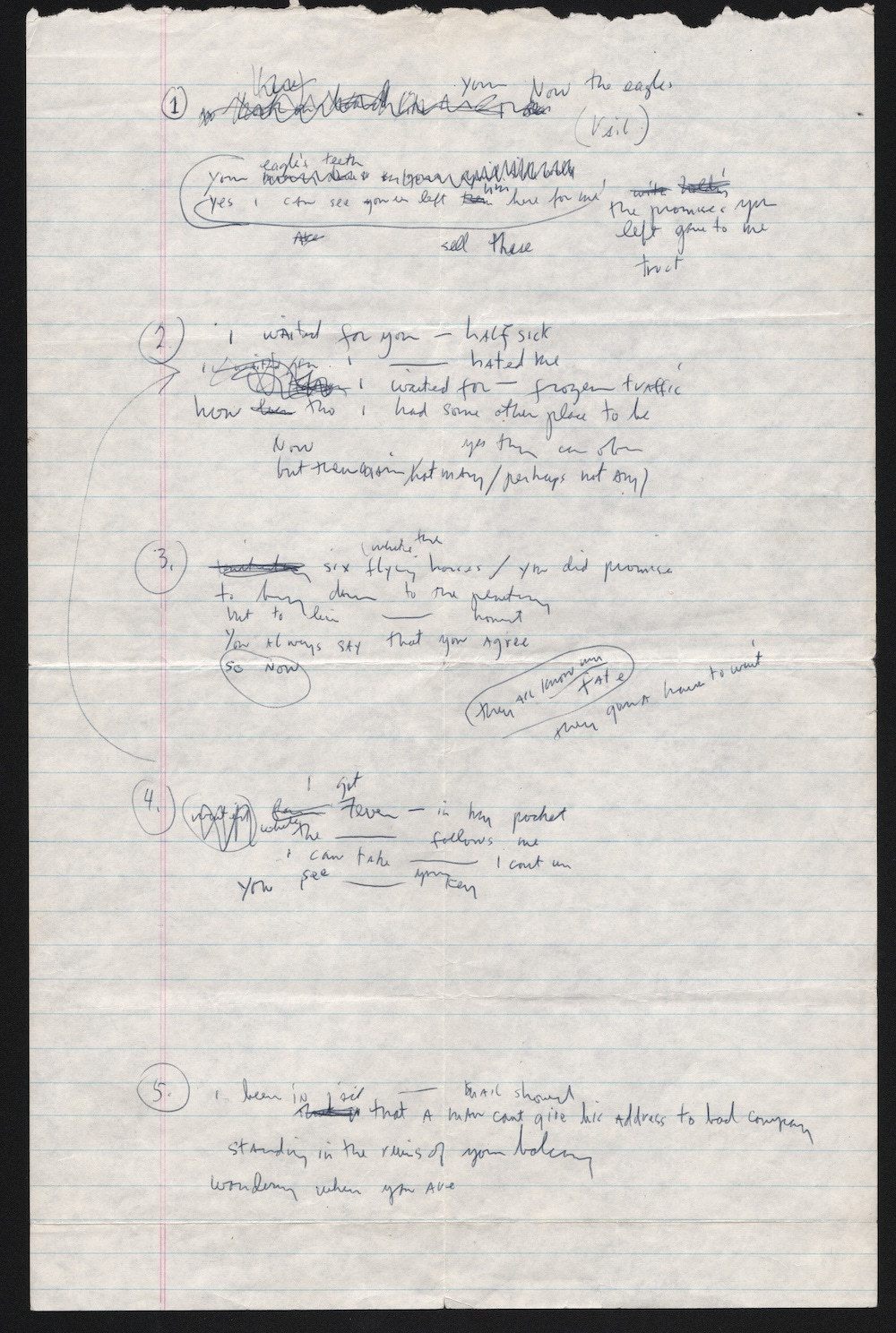
How did you get those three?
The “Absolutely Sweet Marie” one I bought privately, and the other two I bought at auction.
I want to be discreet about this, but sometimes things are offered in auctions alongside other things that, in my opinion, are not authentic. That degrades the real stuff, and sometimes you can get a relative bargain.
That degrades the real stuff because collectors think all of it might be inauthentic?
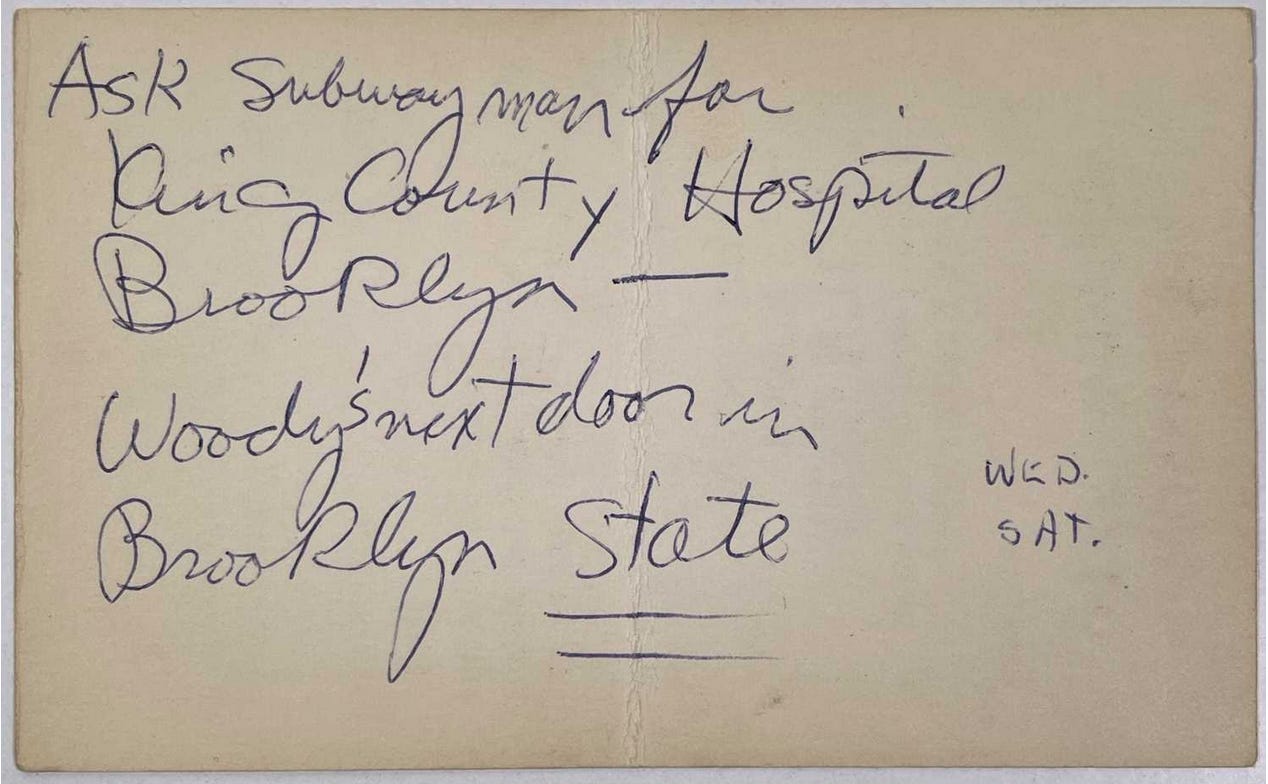
Exactly. There’s a humongous amount of fake autographed material being offered for the most prominent artists—The Beatles, Stones, Dylan, Hendrix. Anybody whose autograph or handwritten stuff is worth a lot of money. There are a few people who can tell, with relative certainty, whether something’s real or not for different artists. I never trust anyone who claims they can authenticate every artist.
Nobody really knew what a real Bob Dylan manuscript looked like until about 15, 20 years ago, because, other than the lyrics book, there had been very few directly from the source. So people were basing their opinions on what had a good story, what seemed real, et cetera.
What makes you suspicious? How do you tell?
Somebody who’s offering impossibly great Beatles, Stones, Dylan, Hendrix signed albums. Nobody got near the Beatles after 1964. Combine that with: nobody was carrying around albums to get signed at that point. So there are a handful of signed, authentic '60s Beatles records and a handful of signed Hendrix records. These artists, you couldn’t get to them, or they died early.
When somebody’s offerings look too good to be true, they generally are.
How do you confirm that? You must at this point be sort of an expert on Bob Dylan’s signature.
I was hired to appraise the Dylan archive. Happily, I spent about half a year going through Bob Dylan handwritten things. They came straight from Bob Dylan or his office; I knew they were authentic. So I’ve seen as much Bob Dylan handwriting as anybody in the world. I think there are two other people, Parker Fishel and Mark Davidson, who’ve seen everything I’ve seen. I spent a huge amount of time looking at this stuff. So I feel pretty confident about knowing quickly whether something’s genuine or not.
There are a few other artists I’m pretty good at, but I always check with other experts on artists other than Dylan. Since there have been a lot of lawsuits around disputed high-ticket signed and handwritten items, including one I filed, I’m unable to authenticate Dylan items for other people. But the advice I’d give anyone buying a signed item, by Dylan or any other artist, is insist the seller gives you a written lifetime guarantee of authenticity. Anyone selling authentic items should be willing to provide this.
Let’s dive into the Dylan Archives appraisal. How did you get involved in doing that?
I became very good friends with Jasen Emmons from the Experience Music Project. When he started working on their traveling museum exhibition—which was the only one ever approved by Dylan—he drafted me to help out. I was probably the major lender to that exhibition, though there were lots.
Through that, I met Jeff Rosen, and we became friendly. He would call me occasionally when he had a question, and I would call him when I had a question.
One day he called me and said, “Look, I have a project I’d like to get you involved in, but it requires you to sign an NDA for me to tell you what it is.” I said, “Sure.”
You must have known it was Dylan something.
I knew it was Dylan, but that was all I knew.
So he told me that they were making this deal with the George Kaiser Family Foundation to purchase the Dylan archive, and that he needed somebody to appraise it. He figured I knew as much as anybody about the value of Dylan collectibles. He sent me this long PDF they’d put together of what it was.
I came back to him and said, “I can easily value this as well as anybody, but I assume you get audited with some frequency, and I’m not the guy to write you an IRS-compliant appraisal this big and defend it to the IRS. But I have a friend, Laura Woolley, who is a professional entertainment business appraiser. She did the Michael Jackson estate and defended it to the IRS successfully. And if I brought her in, I think we could do a bang-up job on this.”
So we did it together.
What is “doing it”? You had thousands of handwritten things. How the hell do you go about figuring out what each one of them is worth?
We spent a week in the Dylan office in New York looking at everything in person, just familiarizing ourselves. We photographed everything in the flat files, every piece of artwork, every photograph. Then we got scans of every single thing—every piece of writing, every piece of correspondence, every lyric manuscript. The only things we didn’t see in person were the tapes and videos, which were in storage.
What you do is, you research what Dylan items have been sold before in the marketplace, what has been sold for artists who would be equivalent to Dylan. You come up with an internal algorithm of what these things are worth and just start chipping away at it. We spent six months going through it and attaching a price to each thing.
So what would be the sort of thing that is worth a lot of money in these files?
He had the typescript for “Subterranean Homesick Blues.” He had two of the three Blood on the Tracks notebooks. We’re holding them going, like, “I can’t believe I’m holding this.”
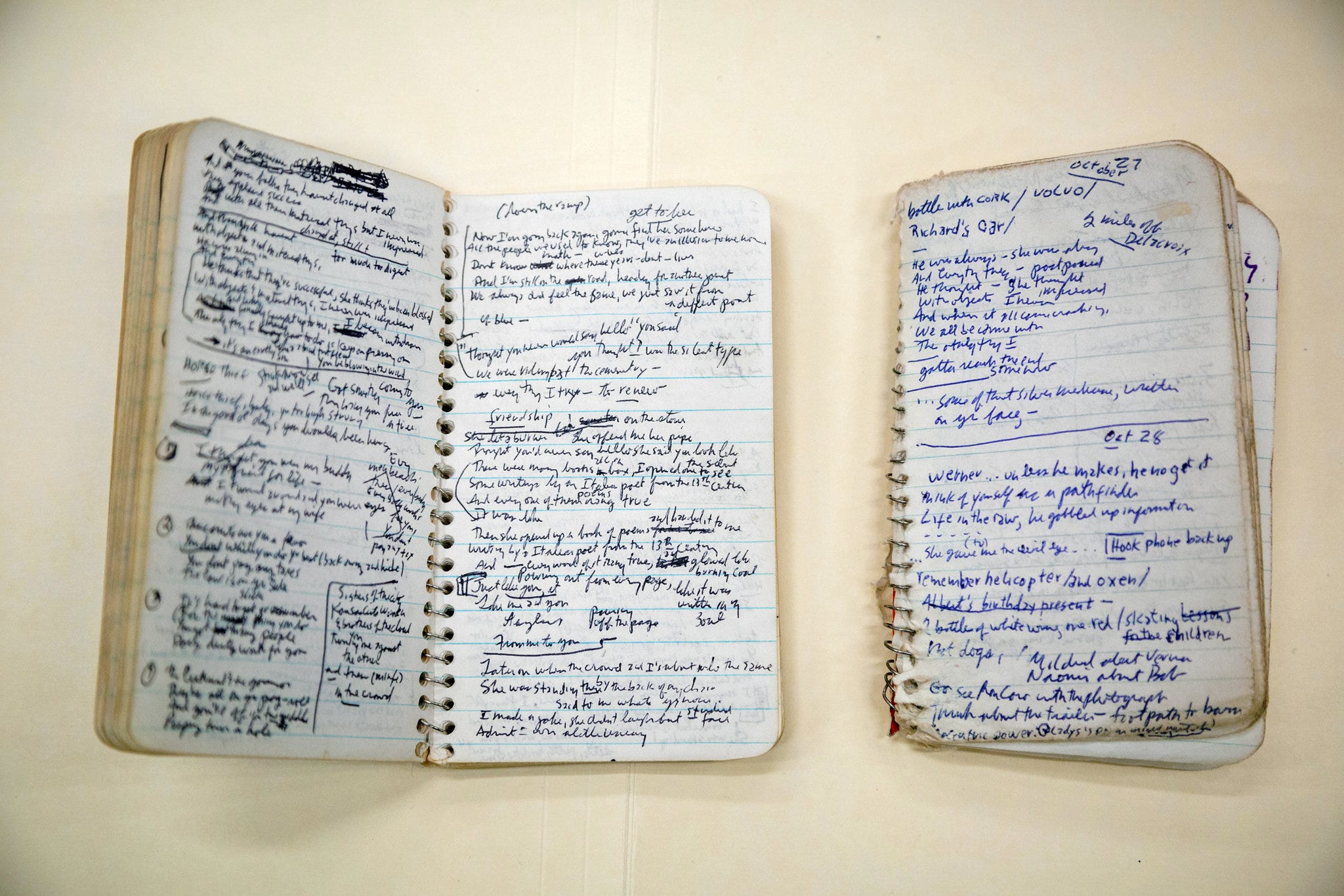
I had a bunch of insights. One is that Bob Dylan’s reject rate is probably 95 percent. He’s constantly writing, and a huge portion of it never shows up anywhere. I remember looking at the typescript to “Subterranean Homesick Blues” and thinking, “Oh, he’s making this up as it goes.” That particular song more than any seemed to me like something that was unfolding as he was typing it.
My second big insight is, there were a lot of things that he wrote to himself. Notes processing things, remembering things, making lists of records or musicians that have inspired him. I came away thinking, anybody who thinks they know what’s going on in Bob Dylan’s head is crazy. They’re on a fool’s errand. The only person who knows what’s happening in Bob Dylan’s brain is Bob Dylan.
I remember when I went out to Tulsa for the Dylan Center opening, they had “Dignity” lyric drafts laid out. Sheets and sheets and sheets of paper.
I think the most drafts were for the song “Tempest,” which was 26 pages. He’s writing so much stuff and making marginal notations, and then editing and editing and editing, crossing out verse after verse, rewriting it. He’s just a merciless editor.
There are so many notepads where he’s checking into a hotel in Hamburg and grabbing the notepad by the phone and just writing and writing and writing, and you never see any of it anywhere. Myself and somebody else from the Dylan office would just go through Googling lines to see if anything showed up anywhere. Some of it did, but much more of it didn’t. You’re looking at 10 pages on a notepad and like three lines pop out in some other song somewhere.
I wrote about the hotel stationery ones a while back. That helps you figure out when exactly he wrote it. “Why was he at some hotel in Macedonia? Oh, he played there in 2010.” It gives you a little window into life on the road.
He would write in these spiral-bound things, too. I bought one at auction. It was one of these crazy situations where Sotheby’s had this auction, but the pages were all blurred out, so you couldn’t see what they were. It was a notebook that came from Victor Maymudes’ daughter. I had been corresponding with her a few years before trying to buy it, so I knew what it was, but nobody competing would know what it was. So I bought it for a relatively small amount of money.
The writing is really tiny, like the Blood on the Tracks notebooks, and he’s remembering stuff from his childhood. What he was listening to on the radio. I’m guessing it was in anticipation of Chronicles. He was just trying to conjure up things from his youth.
There are three or four pages of that, and then the rest of it is lyrics that show up nowhere. Some of them about the Waco, Texas shooting. He’s writing a song about it.
In the case of the stuff you were appraising, how is all that stuff getting saved for decades? Is Bob just a pack rat?
He would send things to the office to get typed and transcribed and registered for copyright.
So it’s not that Dylan himself was sitting on all these lyric sheets for a million years. It’s that he sent them in because they needed to get transcribed and sent to the copyright office.
There’s a lot of that. There was a lot of stuff that Bob himself had saved.
The things I have were things that he just discarded once he was done with the process, threw them away, and somebody saved them. There’s a lot of that kind of stuff that’s made it out to the marketplace. But I was shocked at how much stuff there was [in the archives].
I read an article a few years ago about how the market for Elvis memorabilia is collapsing. Essentially because, to put it bluntly, all the people who care are dying. Is that happening with Dylan, or is there any worry that will happen?
That’s something I spend a lot of time thinking about, actually. And Elvis is the perfect paradigm. The audience for a particular artist gets old and dies. In the case of Benny Goodman, who we were discussing before [we got on], those were our grandparents.
That being said, Benny Goodman was an important historical figure because he was the first major artist to integrate his band. When he got pushback from promoters saying, “Hey, we can’t have an integrated band on stage,” Benny Goodman would say, “Great, I won’t play.” So if you came up with some Benny Goodman collectible telling that story—letters from him saying “Screw you” and the promoters caving, let’s say—that would still be a really valuable item in 2026 because it tells a really important story in popular culture. But failing having that, the market for Benny Goodman collectibles is difficult to nonexistent.
Elvis is instructive in that the people who collect Elvis are either, for the most part, getting old or have passed. He’s a generation or two before Bob. So if you have an “A+” collectible Elvis item, it’s worth more than it’s ever been worth, because it’s a trophy piece. If you have an “A” Elvis item, it’s worth what it’s always been worth. But the falloff is steep after that.
The Bob market is as good as it’s ever been. When you have '60s icons like Dylan, Beatles, Stones, Hendrix, a few others, there are younger people who collect that stuff, because the music has lived on in a way that Elvis or Benny Goodman haven’t. Eventually the same thing will happen that happened with Elvis, though probably a lot slower, because these artists are so iconic and are more popular than they’ve ever been today. But, yeah, it’s something to think about.
When Dylan has some sort of big moment in pop culture—he wins the Nobel, A Complete Unknown, something that goes beyond us music nerds—do things get more expensive?
Not really. There might be people who go, “Oh, yeah, I’d like a Bob Dylan autograph.” So maybe more of that, but anybody who’s buying a serious collectible for serious money, I don’t think that moves the needle.
How do you respond to the criticism that a lyric sheet or something should be in a museum or available to the public rather than in some rich guy’s private collection?
I agree, actually.
I bought the archives of Gloria Stavers, as I said, from 16, and Ralph Gleason, who was essentially the first popular music and jazz critic in America. Among their stuff, they had huge clipping files. Gloria Stavers literally clipped out of the paper the first article ever written about Bob Dylan, which was Robert Shelton’s review of the Greenbrier Boys and Dylan at Gerde’s. That’s how early she was into Dylan. And Gleason was not far behind.
Between the two of them, I had six notebooks of clippings in chronological order that went from that first article through '68. And that stuff is impossible to find. You might be able to find the content online, but the actual artifact, impossible. I’ve had these things for 25 years sitting on a shelf. Occasionally I’d pull them out when they were doing a new Bootleg Series and wanted to find artifacts from a particular era. I’d scan ‘em and give them to them, or things like that.
Two weeks ago, I finally decided, “These belong at the Dylan Center.” I had my assistant pack them up, they’re sitting in my garage, and I’m sending them out next week.
I do believe they belong in museums. So yeah, I agree. These things should be in a public space. Unfortunately, it’s very difficult for institutions to come up with the kind of cash these things cost. I will always sell something for less to an institution, and I will always loan something to an institution. I donated a painting of Bob’s to the Dylan Center. I’m very supportive of them. I’ve donated a lot of stuff to the Hall of Fame.
What was the painting?
It was a painting of Sara pregnant, I think with Sam. It was one of his earliest paintings. There’s pictures of Dylan and George Harrison in Dylan’s house, and you can see the painting on the wall. It’s from ’68. I think his wife gave him the art materials in ’68, so it’s very early.
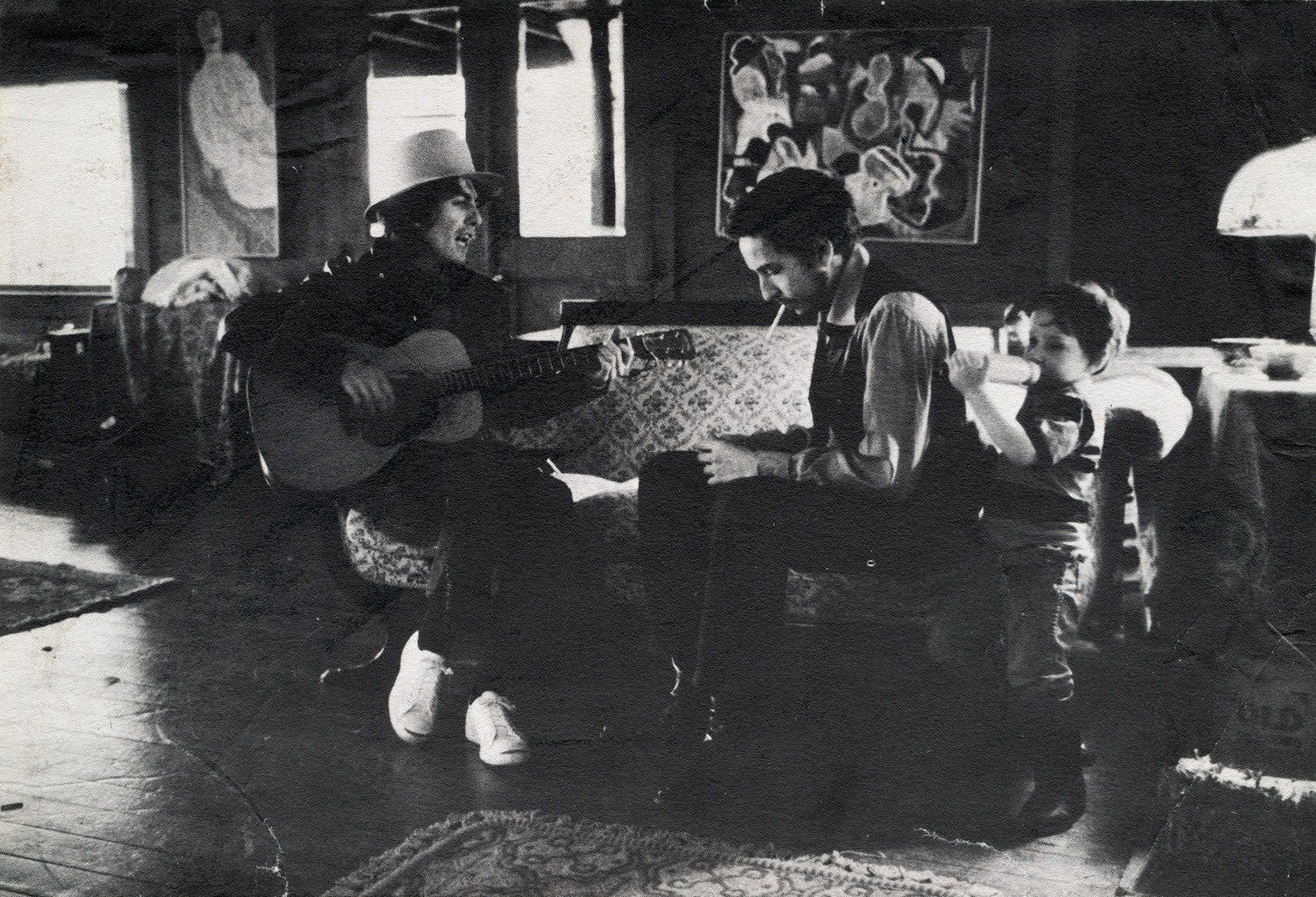
Where did you get that one?
Bernard Paturel, the guy who owned Cafe Espresso in Woodstock, was kind of his part-time factotum. Dylan would type lyrics in a room upstairs that they rented to him. Years later, in the early '70s, when he was closing up the Woodstock house—he’d gotten divorced—Paturel is helping him. He gave the painting to Bernard. And Bernard’s family sold it to a friend of mine who sold it to me.
Can’t imagine why Bob didn’t want a painting of his ex-wife hanging on his wall.
Nude and pregnant!
You mentioned Gleason. I know that plays into you discovering the Brandeis 1963 concert tape that got officially released. How did that happen?
Ralph Gleason was a huge supporter of Dylan early on and became friendly with him. And he saved absolutely everything.
Years after Gleason died, I got introduced to the family at a time where they were trying to raise some money and clear the house out. The first time, it was kind of like, “Okay, you can go into the garage this time.” I went into the garage, and they had maybe fifteen file cabinets filled with stuff. I bought a lot of stuff, and they liked dealing with me. So the next time was, “You can go in the house.” Then the third time is, “You can go in the basement.”
In the basement, he had all these reel-to-reel tapes. Some of them were extensively annotated, and some of them not at all. Most interesting was maybe three feet of reel-to-reel Dylan tapes. Gleason had gotten stuff from Dylan and Grossman and Columbia Records. He was friends with John Hammond. People would send him tapes of bootlegs.
Some of the stuff, it was obvious it wasn’t that interesting. Tapes of bootlegs that had been released. And some of the stuff looked interesting. I said to Toby, Ralph’s son, “If you’re up for it, I’ll take the tapes that look interesting. I’ll book a studio at my expense, listen to them, and we can figure out where we go from there.”
A friend of mine had a studio and we just listened to tapes and tried to figure out what was what. So we’re listening to these things that are fairly uninteresting—“oh, this is a bootleg” or “oh, this tape’s been circulated.” There was this one that just said “Dylan Brandeis” in very light pencil on the spine of a white box. I put it on, and it was like perfect quality stereo. I was like, “What the hell is this?” I started Googling. There’s no Bob Dylan Brandeis tape anywhere. No story behind it. Just the two words, “Dylan Brandeis,” on the side.
The quality, as I said, was just incredible. So I sent it to Jeff Rosen and he said, “All right, here’s what I can pay you.” It wasn’t what [the Gleason family] was expecting, but as I explained, yes, you have an unreleased Bob Dylan tape, but it’s of no good to anybody else in terms of releasing it. Otherwise, it’s just somebody buying it to brag. They, like I, were interested in seeing it get released, so I sold it on their behalf to the Dylan office. Pretty quickly, they came up with a plan to release it.
Another time I saw your name pop up in the press. What is the story behind the Newport 1965 guitar?
I’m friendly with a guy named Andy Babiuk, who is one of the foremost rare guitar experts in the world. Andy calls me one day about this PBS show called History Detectives. Viewers write in and say, “I’ve got this thing” and they have a panel of experts research it and decide whether it’s genuine or not and what it might be worth. Somebody had called who supposedly had Bob Dylan’s guitar from Newport, and they asked Andy to authenticate it. It had some lyric manuscripts in the guitar case, and Andy called me to authenticate those. The lyrics were pretty easy. I could look at them and go “Yeah, these are real” instantly.
How about the guitar?
There were no close-up pictures of Dylan at Newport, and no color pictures. History Detectives found some doctor in New England who had done a blog post about being there and posted his pictures, which somehow nobody from the Dylan world had yet noticed. These were very close-up and in color. I mean, the guy was like 10 feet away, something like that. So Andy was easily able to match the wood grain on the guitar in question to these photographs. And it was obviously Dylan’s.
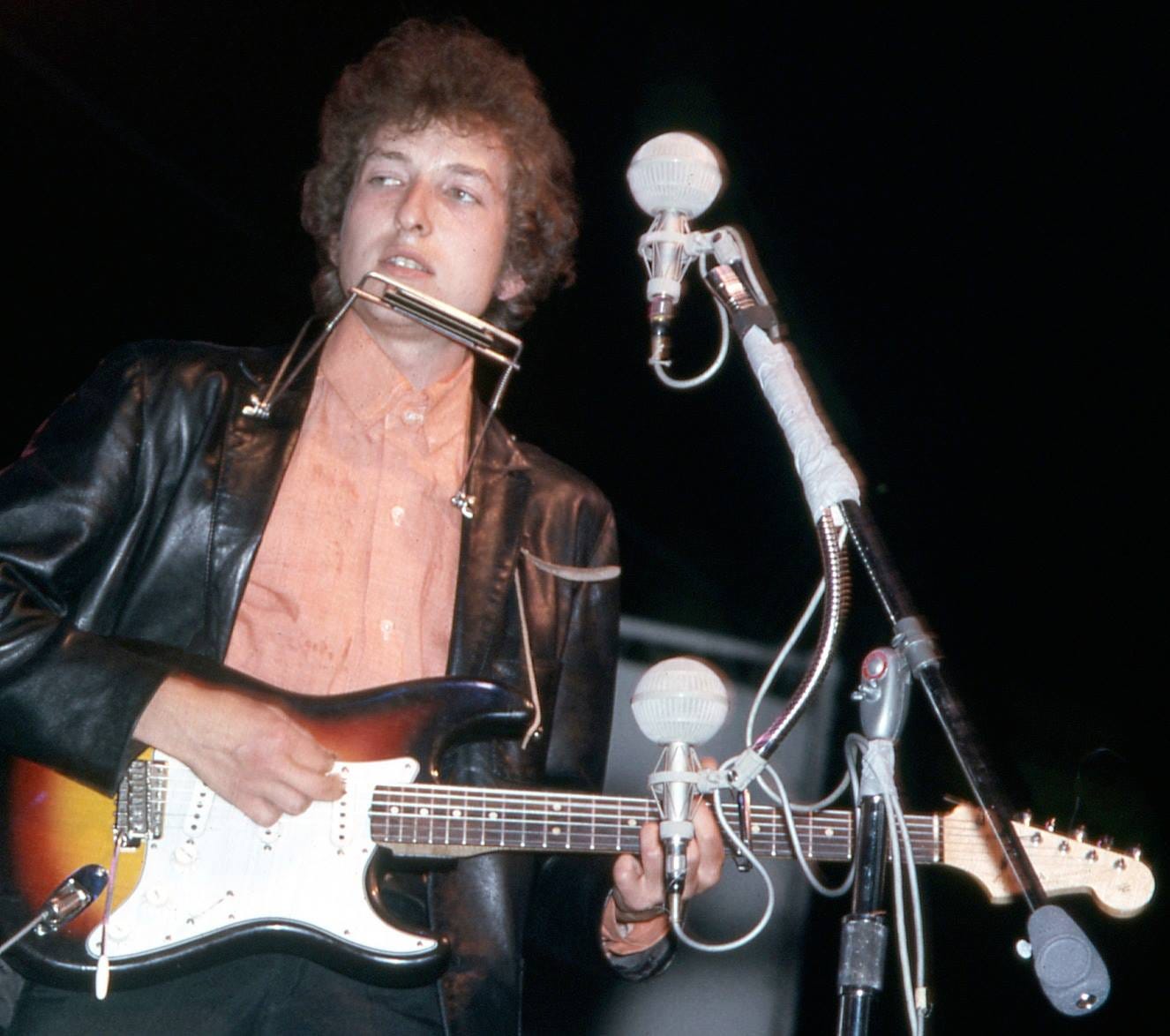
The woman who had these, her father had been Dylan’s pilot. He flew Grossman’s artists to shows, including Newport. According to her, the guitars were left in his plane. The father tried to return the guitars and never got a call back.
I did some research and found that the airport this guy flew out of was something like 30 minutes or 30 miles from the Grossman office in New York. Very close. My brain goes to, “How hard would it have been for him to just drive over there and say, ‘Hey, here are these guitars’?”
I tried to broker a sale of the guitar involving a private buyer, her, and the Dylan office. It didn’t work. It later got sold at auction. That’s all I can say.
You at one point had the Clinton inauguration guitar too.
I look at eBay a lot, and I saw this guitar. It was something like $5500 minimum bid or $6500 buy-it-now. The auction passed without anybody making a bid.
I called the guy, and he told me this story that sounded completely legitimate. He had two letters from Gibson saying what the guitar was, with the serial number, and he emailed them to me. I go, “This looks absolutely like the right thing,” so I bought it.
I called Andy Babiuk, and he said, “You see that little thing that looks like a leaf on the headstock? That’s mother of pearl. It’s like a snowflake. Each piece is different. If you can find a high resolution photo, you can compare the mother of pearl. No two pieces will look the same.” I went to Getty Images and I found a very high-res photograph of Dylan at the Clinton inauguration that was taken by a pool photographer. It was obvious instantaneously the guitar was real.
That guitar, I believe, is going to come up for auction this year. I sold it to Jim Irsay, owner of the Indianapolis Colts and the biggest collector of music memorabilia there was. He unfortunately passed away last year. [Update: It just sold for almost half a million dollars!]
Speaking of auctions, are you involved with the T Bone Burnett thing, Ionic?
No, and I’m not a big fan of that. To me those are fake collectibles. You know, “We’re going to manufacture a collectible to sell for a lot of money” rather than something that played a part in the history of Bob Dylan.
Because it was designed to be a collectible? Unlike all this other stuff we’re talking about.
You’re buying something that was made to be a collectible. They can do that with his whole catalog or any other artist’s catalog inexhaustibly. There you’re just buying something literally to brag about, I guess. When I was in the record business, I was one of the innovators of doing limited-edition collectibles to sell. But those were $25 to $50 or something, not a million dollars.
I can’t remember what the first one was [”Blowin’ in the Wind”], but I said, “This is going to leak.”
It leaked immediately.
It leaked immediately! Like the next day.
I don’t know who actually bought it, but it seemed like it was marketed maybe more to art collectors than music nerds. Like the person buying these things might not even be a huge Dylan fan.
Would I rather own the lyric manuscript to “I Want You,” one of my favorite Bob Dylan songs ever, that was written as he was composing the song? To me, that’s true history. Whereas something like that, it’s not the same. I don’t mean to diss anybody, but for me as a collector I’m much more excited about getting something that is a part of the creation of a great piece of art.
For someone like Dylan, is there stuff that’s worth money from, say, the 21st century? Or is the market really the golden era of '60s, '70s?
In general, the earlier, the more collectible. Like I would love a signed copy of Shadow Kingdom, but that’s worth a lot less than a signed copy of The Times They Are a-Changin’. People want the golden era stuff more than the things from today.
Thanks Jeff Gold for taking the time to chat! Check out everything he’s got for sale at recordmecca.com. He just listed a bunch of new Dylan stuff a few days ago in preparation for this running.
If you liked this, here’s another interview that delves deep into the Dylan archives:
An In-Depth Look at the Bob Dylan Archive's Unheard Live Recordings

Talking Supper Club, Salt Lake '76, and more with archivist and Bob Dylan Center co-curator Parker Fishel
This is a massively interesting interview with Jeff Gold re:Dylan’s archives…your interviews are impactful and are historic documents, too. I love reading these Ray, so thanks a million.
Thank you! That was fascinating. A great read! Thanks to Jeff for being honest and interesting. Learnt a fair bit, too!