
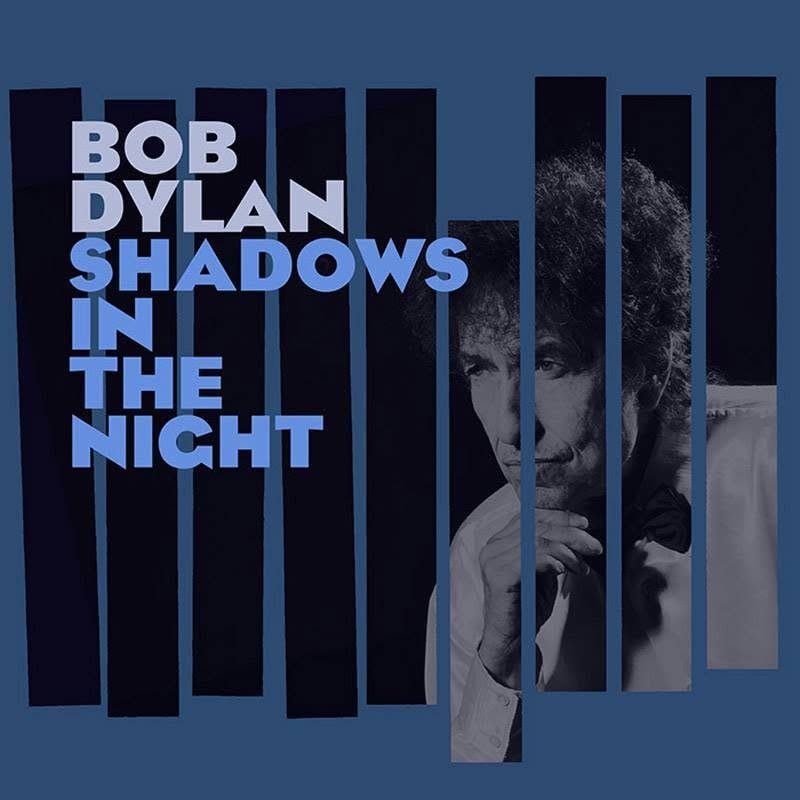
Bob Dylan mostly recorded his first two standards albums, Shadows in the Night and Fallen Angels, with his road band. The only other players on the albums are a small horn section, who appear on a few tracks on each. Today, we hear from a few members of that horn section.
They operate in a different recording world than Dylan: working off charts, union-scale pay, strict three-hour contracts, knocking out multiple sessions a day for different artists. That’s the old-school system of Frank Sinatra, who recorded most of these tunes first—and often in the same historic room Dylan did, Capitol Studios in Hollywood. And that’s how they worked with Dylan too, who seems to have adapted: Quick and efficient, with minimal small talk or wasted time.
Here are three of the horn players’ recollections of recording on Shadows in the Night (the same sessions also yielded Fallen Angels, effectively an outtakes album).
Dylan Skye Hart — French Horn
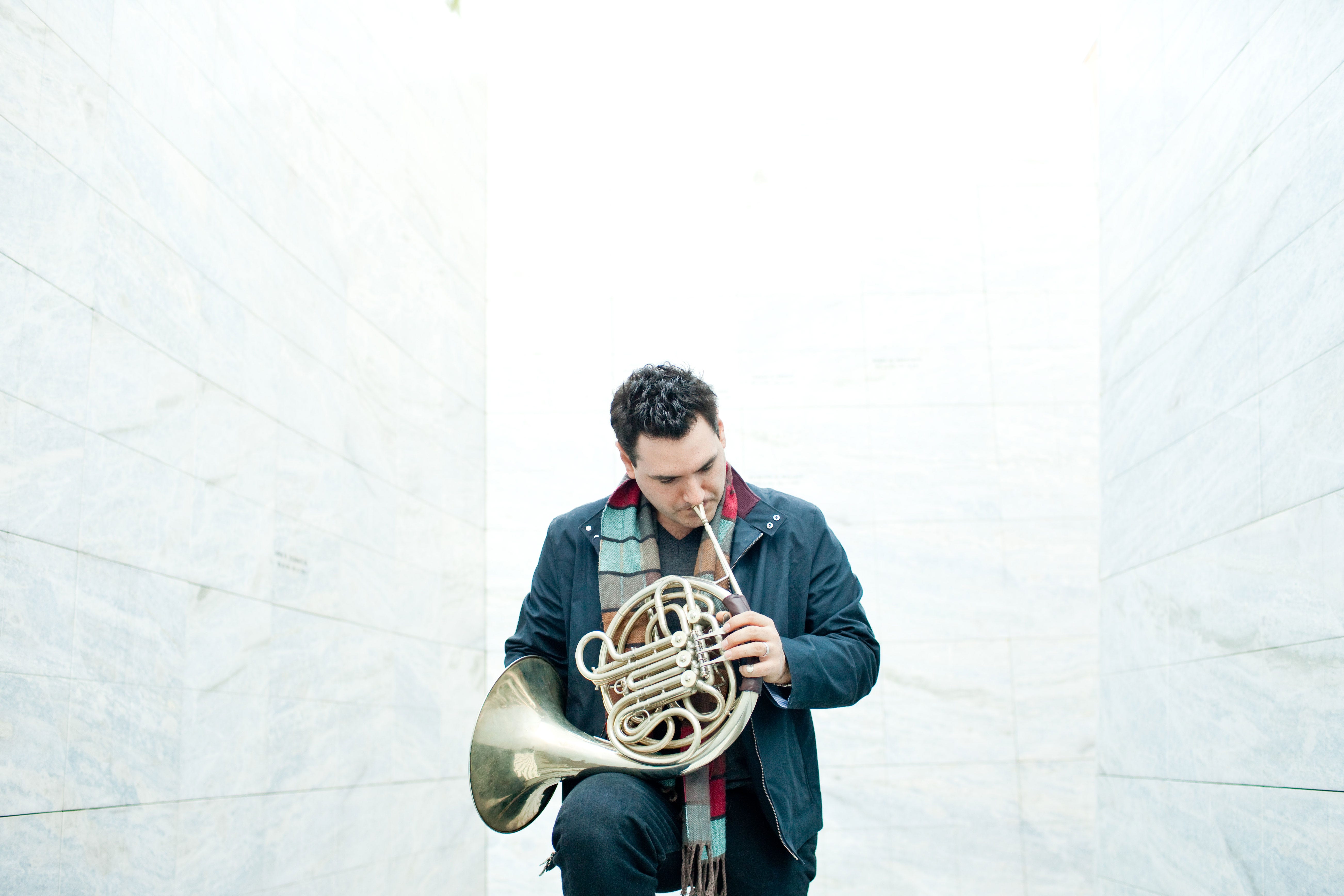
One of other guys told me you were actually named after Dylan. Is that correct?
That is correct.
It was kind of crazy. I didn’t know who we were playing for. I just knew that we had a session at Capitol Records. I was running late, barely making it by the skin of my teeth. So I just got in there, put my stuff down, we started practicing—like, “oh, cool, we’re doing some Great American Songbook stuff.” Then Bob Dylan showed up like 30 minutes later. My heart stopped.
We were recording Frank Sinatra charts in Capitol Records. That’s where Frank Sinatra recorded those charts. And my teacher, Vincent DeRosa, was Sinatra’s first horn player. Sinatra had so much respect for Vince DeRosa that he used to call him Maestro. He’d be like, “Maestro, how’s the kids?”
So there was already that connection, and then it was Bob Dylan, the person I was named after. My mom was obsessed, she absolutely loved Bob Dylan. I’ve heard all of his albums thousands of times. So having that kind of cosmic coincidence happening just felt crazy, crazy special.
I remember after one of the sessions, we were saying goodbye, and I shook his hand. Then I held my hand and I didn’t touch anything and I drove straight to my mom’s house. I was like, “Mom, you gotta shake my hand!”
What do you remember about the sessions themselves?
We were in Capitol Room B, which is the smaller of the two rooms. They had the brass in the hallway that’s in between the booth and the room. In the room itself was the band in a circle, and then Bob Dylan stood in the center and sang. It was very intimate, very small. Four or five people, plus maybe four of us on brass.
For me personally, it was high-pressure. Like, I really felt like this was important. The weight of the situation made itself known to me. And there were a lot of horn solos that I had to do and some kind of high, tricky stuff. I remember pulling myself together and having to go through that.
You mentioned the handshake. Did you have any other interactions with Dylan himself?
No, he’s a pretty private person. I spend a lot of time backing up big names, and some people are more friendly than others. Like Michael Bublé just wants to be part of the group, one of the cats. Then people like Barbra Streisand, she has her own world where she has the people that she talks to. And that’s fine.
I always call what I do being secret-famous, because everybody’s heard me, but nobody knows who I am. Like I can walk through an airport and I know every single person at that airport has heard me play, and not one person can identify me. That’s kind of cool.
Did any part of you debate whether to tell him that you were named after him?
Yeah, I figured if I got in a conversation with him that went beyond the formalities, I would tell him, but I wasn’t about to try and barge in and be like, “Oh, I’m so glad to meet you. I was named after you!” I don’t think generally that’s what people want when they’re working with you, you know?
I’m trying to imagine how that would go. I’m not imagining anything good.
I always try and treat people like normal people. I try not to treat them famous.
So you’re watching him work. What are you observing? What is his demeanor?
He was very quiet in terms of feedback or criticism. I mean, his band was just so good, and they knew it. He would just stand in the middle and kind of absorb it all and sing. He didn’t really have to say much.
It must have been quite a moment when you don’t know who it is, and then your namesake walks in the door.
Yeah. I mean, we do a lot of anonymous sessions. Then you show up and you’re like, “Oh, there’s Snoop Dogg” or “There’s Dr. Dre.”
Are those real examples?
Yeah. Dr. Dre is super nice.
The spread from Michael Bublé to Dr. Dre is a wide one.
One of the most amazing experiences I had was playing with the Wu-Tang Clan for Coachella. In between rehearsal and show, we were having lunch. The whole band, like all of the Wu-Tang Clan, were at a table like next to me. After lunch they started talking business.
It was the most fascinating thing I’ve ever heard, because they were speaking, you know, in slang and however Wu-Tang speaks. But if you translated it into like Fortune-500-executive-room-speak, it would be the same exact language. Think of Method Man and Redman and all of them sitting at a table, all talking. It was really mind-blowing to listen to.
Any other memories or stories we haven’t hit on yet?
I can so see myself there. I remember the lighting. I remember where I was sitting. I remember looking down at the floor to gather myself before playing a solo. For me, it was such a banner moment in my career and in my life, and I’m so grateful to have been able to be there for it.
Andy Martin — Trombone
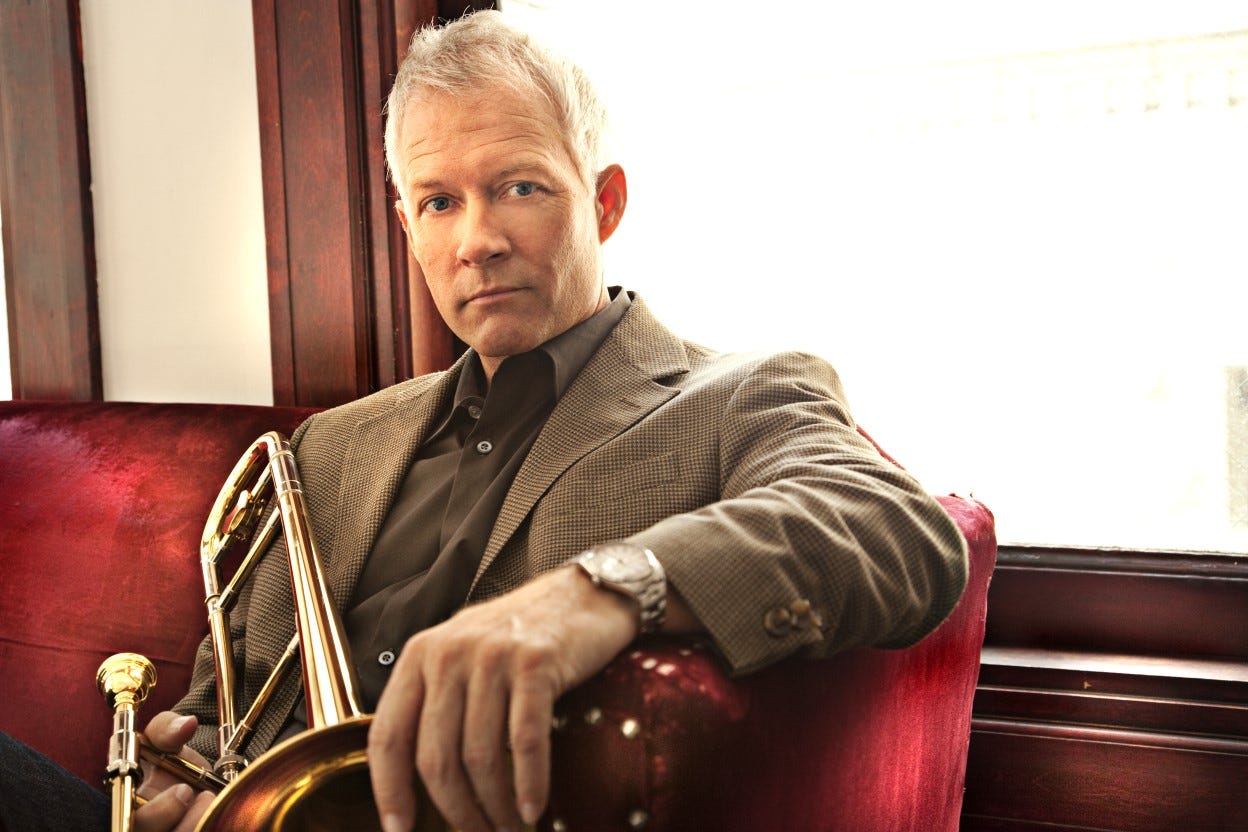
Do you remember how you got involved in that session?
I did two sessions, I believe, and they were quick. I got called by the contractor. His name is Dan Savant. He put out a call for a small horn section. He wouldn’t tell us the artist.
The funny thing I remember about it is they set us up in the drum booth. As you enter Capitol B from the hallway, you enter into the drum booth, and then you either take a right turn into the recording booth or you go straight through the drum booth into the main studio. So we’re sitting there facing the main studio, the glass door between our drum booth and the studio, then we hear the door swing open behind us. Sure enough, there’s Bob Dylan walking by us to get to the main studio.
Is this the first time you realize who the session is for?
Exactly. I forget if he even said hello. He seems really shy. He might have grunted out a hello or something, then went into the main studio where his band was and where he was going to be.
Al Schmitt was the engineer for everybody for decades and decades and decades. He’s got this scratchy voice, but super sweet guy. I remember that he was very impressed with Bob Dylan, which takes a lot for Al Schmitt to be impressed with an artist, because he’s worked with everybody from Sinatra on down. I recall he loved the professionalism and the ears and the attention to detail that Bob had.
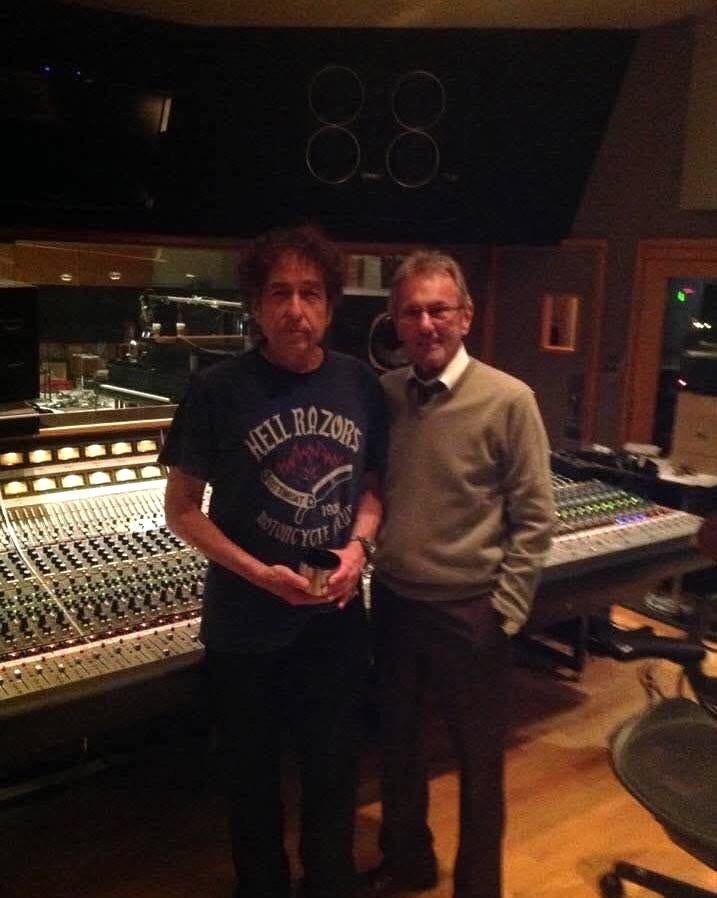
The other detail I remember is they would invite the horns in for one listen back in the booth where everybody was. They’d say, “OK, guys, just listen one time and then leave the room. That’s what Bob wants.” So we just go have our one listen and then leave the room so they could have their privacy. During a listen back when we were allowed into the booth, I just remember him listening very intently to the track and leaning over the soundboard, really checking things out closely.
The two songs I have you on in the credits for the first album are “I’m a Fool to Want You” and “Lucky Old Sun” but I know sometimes these things are not complete. Does that sound correct? Or is there more? Or different?
Yeah, probably just two tunes.
Are you doing a bunch of takes?
We did four or five takes on each tune.
When you’re recording with someone like that who’s in the legend status, is the pay any better, or does that not correlate?
If it’s a union session, the pay’s probably the same for anybody. We get paid according to, like, if we’re playing first chair. I probably got paid extra for being principal trombone. And we get paid twice as much if we overdub to tracks. Certain specifics like that are in the contracts. It just depends on who you’re working for. I’m sure Dan Savant being our contractor probably got us some extra money somehow. He’s always good about that.
I talk to a lot of musicians who’ve played with Dylan and usually it’s loose and you show up and they mess around for hours. Very casual. Lord knows there aren’t any charts. This is sort of a different world.
That’s correct. They probably warned Bob, “We’re on a time schedule here. We got union musicians; we can’t go past three or four hours.” That’s probably why they hired DJ Harper to write the charts, so we’re not just making up horn parts. We have something specific that they thought about before we got there.
It’s sort of appropriate that when he’s doing these Sinatra songs, it’s in this more old-school way where it’s a union gig and there’s charts. A little more formal. If it’s a union gig and you go over the allotted time, do you have to say, that’s it, we’re done?
No. You have an hour specifically allotted to go overtime, but if it goes past that the musician has the option to leave. Past that fourth hour is really on the musician. If they want to keep paying overtime, I’m more than happy to stay if I have nowhere else to be. That means we’re making a lot more money.
Alan Kaplan — Trombone
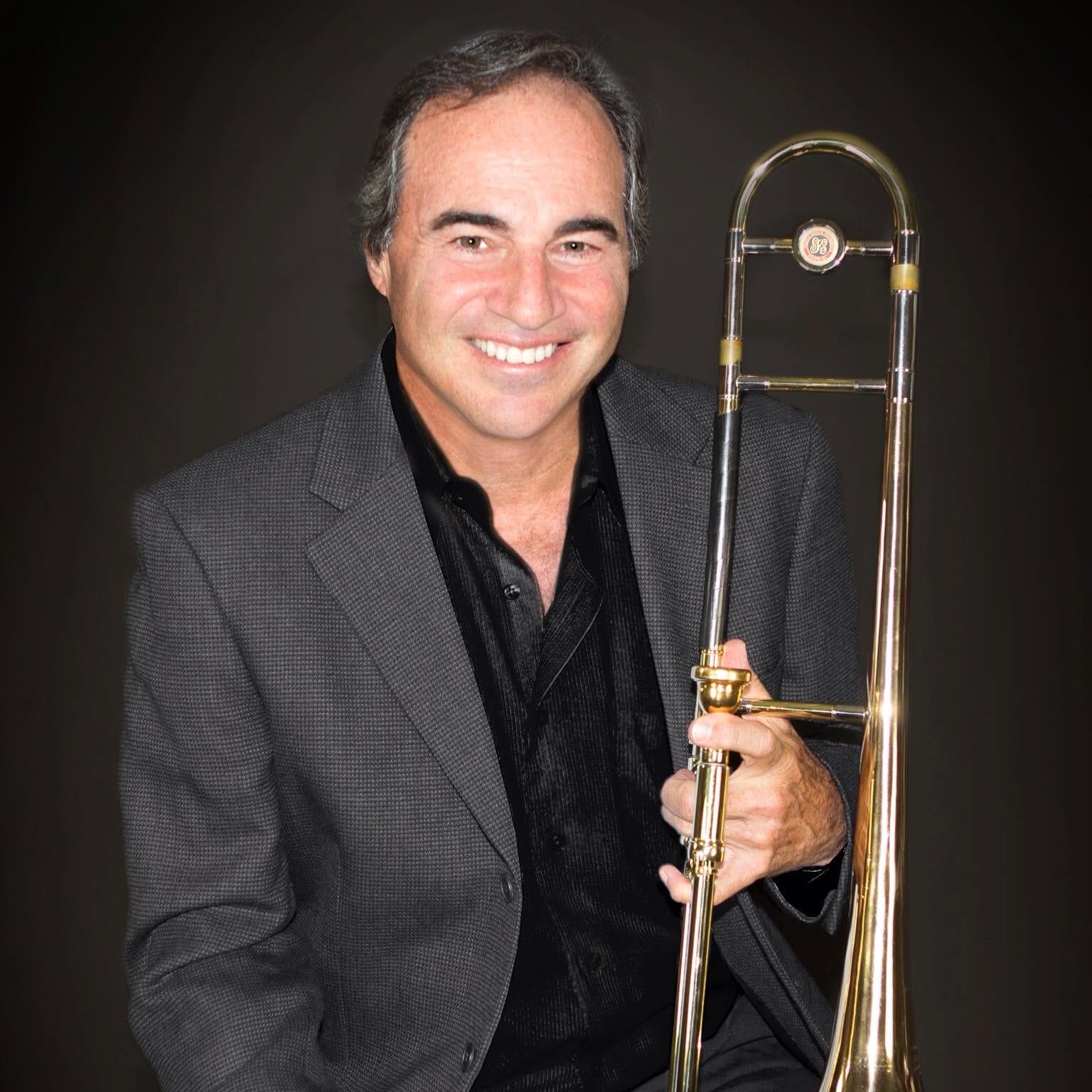
How did you get connected with this session?
It’s not unusual for us to get calls kind of last minute. These were all evening sessions, and I got called that day. It was late, like three o’clock the first time I did it, for a session at seven. I believe I did three of the sessions on this project. When I show up at Capitol, I don’t know what it is. He just said, “It’s a record date, 7 o’clock at Capitol.” I walk in and there’s Bob Dylan and his band.
Those things happen quite a bit. I got a call from a different contractor one time to show up in the same room, Capitol B. I walk in and there’s Paul McCartney playing bass.
Back to the Dylan one. I walk in, and there’s Dylan in the room with his band, and a handful of us were in an iso [isolation] room. They generally use it for the drum sets, but it’s big enough to have like four people, so that’s where we were. Bob Dylan walks by, shakes our hands—kind of a meek one, I’ll say. Kind of a soft handshake.
“Dead fish” is the phrase that gets thrown around.
That’s exactly right. It was a dead fish handshake.
And there’s Al Schmitt, who was one of the top engineers for years at Capitol. I noticed he was very hands-off. I’d never seen an engineer just sit there with his arms folded like that. They normally do a lot of micromanaging and tweaking, you know. I was kind of surprised. But we just played our parts, and they played theirs.
What I believe was happening was Bob’s band was rehearsing during the day, learning the tunes. I have a feeling they might not have been readers, just from the way they were doing it.
When you say “readers,” you mean sheet music?
Yes. If you can read, you can play it right away, but if you need to learn it, that takes time. That’s what they were doing.
The arranger was the son of a composer-arranger that I’ve worked with for years. His name was DJ Harper. He had come up with takedowns. These were all mainly Sinatra recordings, and he had made arrangements for a very small horn section with Dylan’s band. Those were very quickly scratched out. Probably that’s why we got called the same day. Dylan probably selected which tune to do and [Harper would have to] make the arrangement. I have a feeling everything was hot off the press.
People said that a lot of the Dylan arrangements were basically the Frank arrangements, but pared down. Not with a giant orchestra, but a small band and maybe a couple horns here and there.
That’s exactly right. DJ Harper came up with a very reduced arrangement for those tunes. Which wouldn’t take that long. Al Schmitt was telling me that they were just cranking out tunes. Then they sort of decided, which one are we going to record tonight? Which one are we going to have horns on?
Each session we only did one tune. I remember running it through maybe once, and then the band on their own ran through some things, and then we made two or three takes.
This is all live, everyone together, or are you overdubbing?
Yes, Bob was singing live. That’s what was nice about it. The whole band was set up with Bob singing in the main room, and we were in that one iso room.
If you listen to the album, it’s all a pretty consistent sound of his band. I personally would like to have heard the horns a little louder, but it wasn’t up to me.
You’re very prominent on “The Night We Called It A Day,” but do you remember what the other songs you might have recorded on?
That’s the thing. I have the disc in front of me, and these credits aren’t exactly correct. I know that I played on three tunes, and it only shows me on one. I’m positive I played on “I’m a Fool to Want You,” and I know I worked with Dan Fornero on trumpet. He’s not listed. I know I did “I’m a Fool to Want You” and “The Night We Called It A Day.” I have a solo on “The Night We Called It A Day.” I could have been on those tracks and “Lucky Old Sun.”
Bob pulled a second album out of the same sessions, Fallen Angels. There’s some horns on there, too, but not much in the way of credits. Maybe one of your tracks is on there.
That may be what happened. Maybe the other tune I did was on that album. I know I did three, and possibly they’re on the other record.
This was a really special thing for me too because I’m a real fan of the Sinatra ballad albums. I even did my own album of ballads, mostly Sinatra songs, about 20 years ago. “I’m a Fool to Want You” is one of the tunes I did, and also the one that I played the solo on, “The Night We Called It a Day.” So I’m very familiar with those arrangements because I’ve listened to the Frank albums so much.
Did you have much direct interaction with Dylan other than that dead fish handshake?
None at all. Just when he went through the room and shook our hand and said thanks at the end. Our interaction, as far as what we did, was totally with the conductor, DJ. Bob pretty much stayed in [the main room]. Whatever discussions he had were with his guys. He left DJ to deal with us.
Are you there for hours, or are you in and out pretty quick?
We were called for three-hour sessions, and we got done early. We did the one tune, and that was it. There’s time to do more than one on a three-hour session for sure, but I remember it being a very slow pace, very relaxed. Do a take, listen to it, whatever. It was not a high-pressure situation as far as time goes.
Since you played on the song, have you ever seen the music video Dylan made for “The Night We Called It A Day”?
No! I didn’t know there was one.
Not only is there one, but it is great. Like a violent film noir. Robert Davi is in it, who was the villain in a Bond movie years ago.
I backed up Robert Davi. He does the Sinatra songs, too. Besides doing the album, I backed him up on a few live gigs, doing his act. He’s a pretty good singer.
As far as the sessions, I was just amazed that Dylan was doing this kind of project. It was so not his thing. I liked to see him keeping that material alive. They’re such great songs.
Thanks to all three of these great horn players for talking! You can find out more about them at their respective websites: dylanskyehart.com, drewbone.com, and alankaplan.org.