
Flagging Down the Double E’s is an email newsletter exploring Bob Dylan performances throughout history. Some installments are free, some are for paid subscribers only. Sign up here:
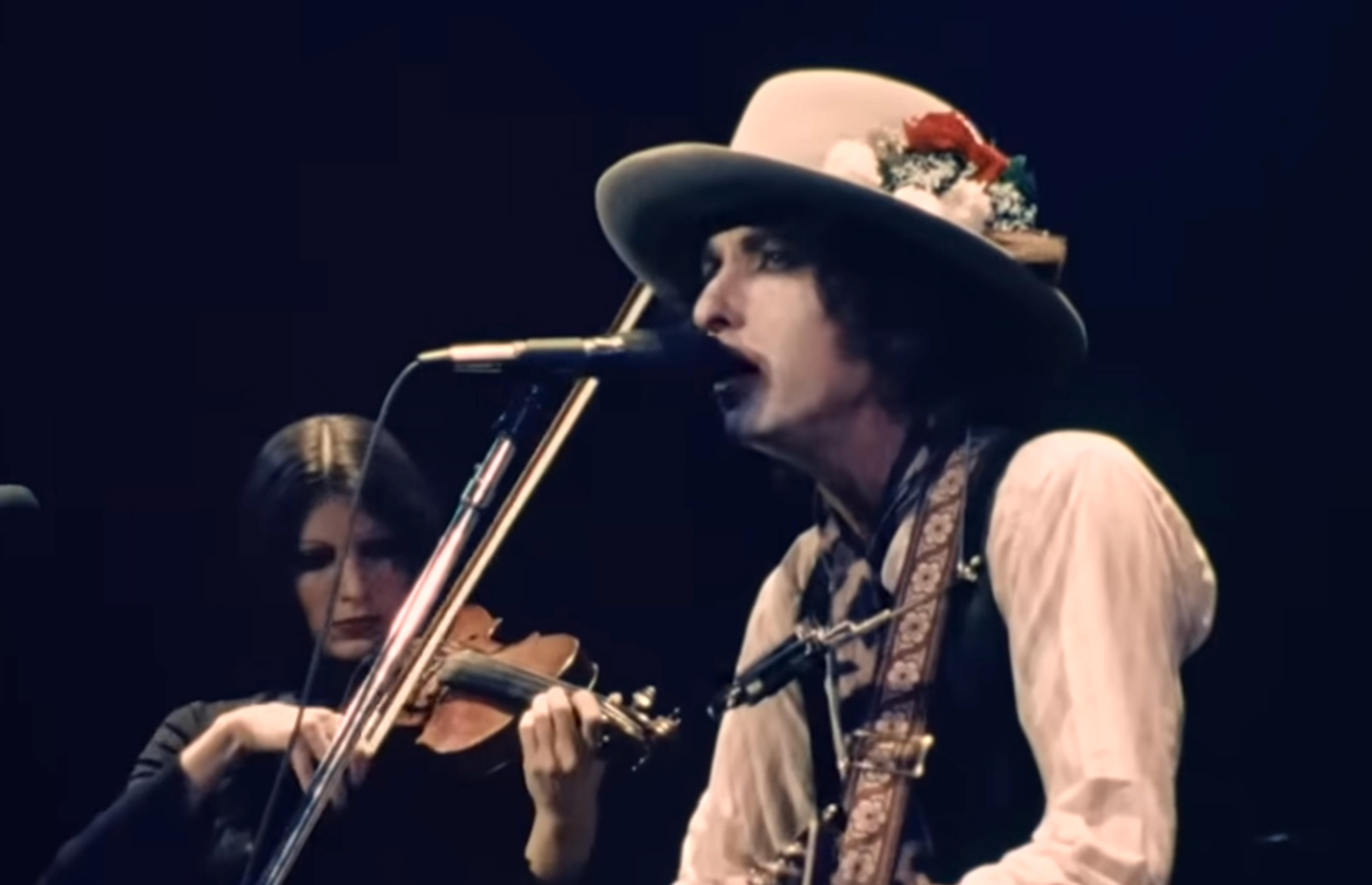
Desire turned 50 this month! So, in honor of that, a run through “One More Cup of Coffee” live arrangements.
I was surprised the song had been performed as often as it had, to be honest. It’s the most-played Desire song by some margin. I would have guessed “Joey” topped it, but “Joey” doesn’t come close. The reason for my mixed-up confusion: “Joey” is the most-played Desire song of the Never Ending Tour. While “One More Cup” was racking up plays in the '70s —over 100 in 1978 alone—“Joey” remained silent.
So today, a run through the handful of different live arrangements of “One More Cup.”
1975 Rolling Thunder - Album Version
“One More Cup of Coffee” was performed every night on the first Rolling Thunder tour. Dylan often introduced it as “a song from the underground,” whatever that means. Is that a “valley below” joke?
As was the case with many Desire songs, the arrangement understandably hadn’t evolved yet. It has a bit of the “Isis” effect, where his vocals gained energy live, but nothing as dramatic as that song’s “If you want me to…YES!” scream. The most notable change is Emmylou Harris’s backing vocal part is taken by Rob Stoner, hitting the high notes. Scarlet Rivera’s violin remains the instrumental star.
1976 Rolling Thunder - One-Night-Only Twist
The following spring, Dylan played “One More Cup of Coffee” less. The few times he did at regular shows, it retained the ’75 arrangement. That gypsy-party violin now sounds a bit anachronistic next to the bilious rage of the ’76 tour’s distinctive songs.
However, for the first TV taping in Clearwater, FL—which he scrapped in favor of Hard Rain—he tried a one-night-only acoustic version. No video circulates (it didn’t make the rough cut of the special that’s out there), but it sounds like just him on guitar and Scarlet on violin.
The other distinctive thing about the relatively few 1976 “One More Coffee”s is that he began changing words on the bridge. Practically every performance, he’d come up with new lyrics. That includes some of the rehearsals. I found four separate stanzas.
That first one comes from a particularly funky rehearsal take that sounds like a promising new arrangement that got abandoned before it was ever performed publicly. I made this excerpt longer so you can hear more of the arrangement.
Your sister sees the future
She was born to read my mind
?
Believing the sign
The next one also comes from a rehearsal tape, the arrangement now back to the standard Rolling Thunder one:
Your sister reads a fortune
She was born to read my mind
Her reality has no limits
Yet it seems well designed
The other two, which were performed in concert, keep the first rehearsal’s future/mind couplet, then follow it with:
She overstates her beauty
But then her words are not that kind
She’s always in the room
But she’s so hard to find
(Shoutout to dylyricus for clocking/deciphering those last two)
1978 #1 - Budokan Sax
The epic 1978 tour saw two different versions. The first is well-known: it appeared on At Budokan. Scarlet Rivera and her violin are gone. This new arrangement, like so many others this tour, featured two distinctive ingredients: Backing vocals and copious saxophone solos. This one also features a prominent percussion part from Bobbye Hall. She gets a short solo at the end.
1978 #2 - “To the Valley Below”
The lesser-known version developed later in the year. The entire thing got stretched out, from three-and-a-half minutes on Budokan to five or six. That meant more sax solos (can’t have too many!), plus Hall’s percussion solo getting longer and longer. But the most distinctive change is that the backing singers gained a new part. Surrounding those long closing solos, they would sing the repeated refrain “to the valley below” over and over.
When this first developed, in the summer, the singers would sing those “to the valley below”s by themselves during the closing solos:
That was only the germ of the idea though. By the fall, they were doing it multiple times during the extended solo-frenzied outro. More importantly, Bob sang it with them, or around them. You can hear it both before and after Hall’s epic congas solo here:
What a finish! Yet more reason why 1978 needs a proper box set that goes beyond Budokan.
Onward to some wild Never Ending Tour versions…