
Flagging Down the Double E’s is an email newsletter exploring Bob Dylan performances throughout history. Some installments are free, some are for paid subscribers only. Sign up here:
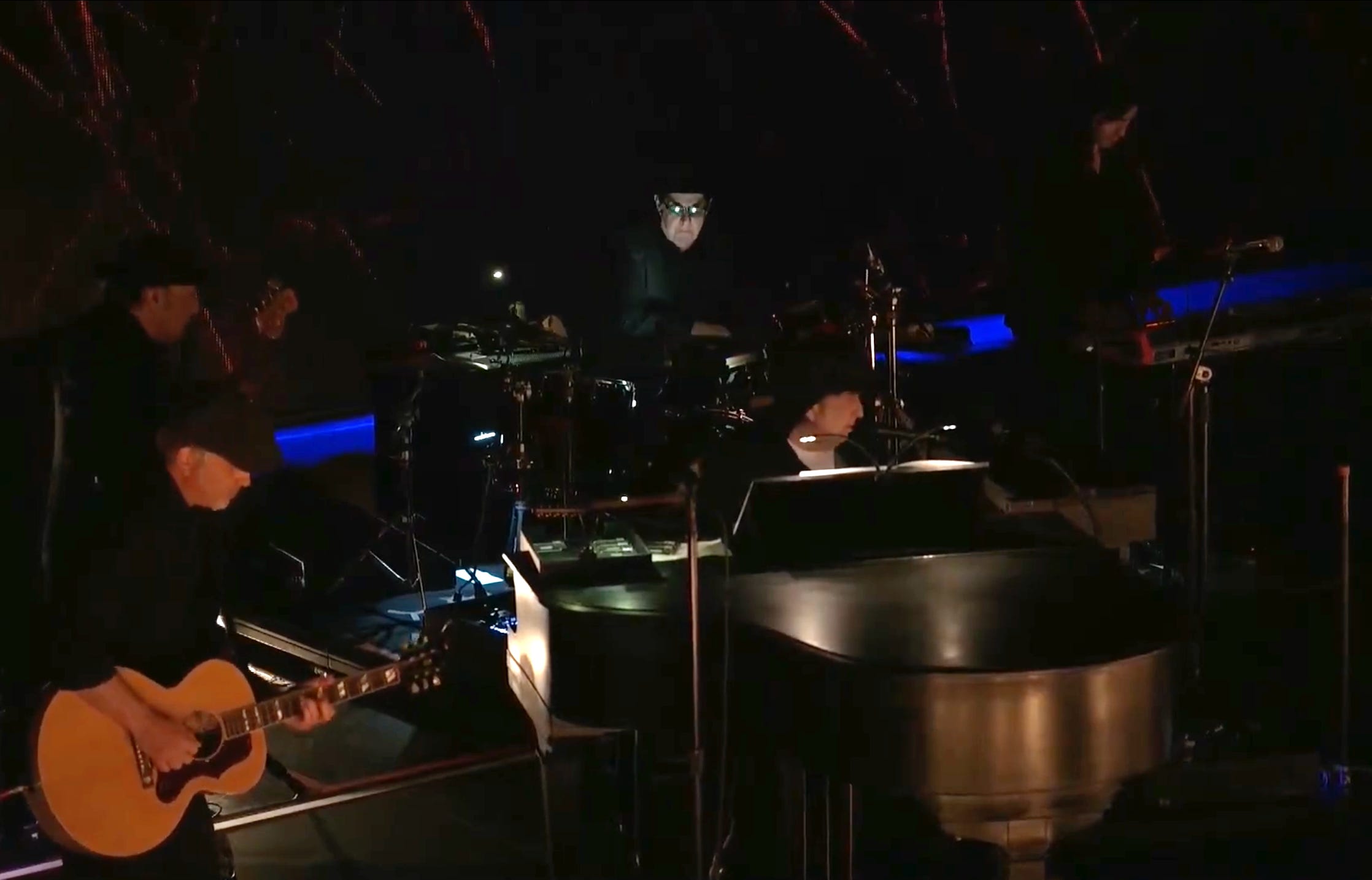
Near the end of last summer’s Outlaw Tour, an unannounced new musician quietly joined Bob Dylan’s band. Fans eventually ID’d him as Matt Katz-Bohen of Blondie and Princess Goes. Katz-Bohen played keyboards on select songs at the final two Outlaw shows, then joined the band for their full Farm Aid set.
Katz-Bohen’s few days with Dylan were a relative blip in a long career. He’s been the keyboardist for Blondie since 2008 and co-founded the electronic-rock band Princess Goes with actor Michael C. Hall (Dexter). Princess Goes just released their new album 3 last week—give it a spin here—and Blondie has a new album on deck for next February.
Here’s Matt Katz-Bohen telling me about joining Bob Dylan’s band last September.
What was your connection? How did you get involved?
I’m still trying to piece that together myself. I think it came down to Clem Burke, Blondie’s drummer. He was friends with Tony Garnier, who lit up when we were in rehearsal. He was like, “Oh man, Clem was telling me about you.” So I have a feeling that Clem put in a good word for me at some point.
Clem recorded with Dylan briefly, but it was way back in the ’80s.
I think Clem must have stayed in some kind of touch with Dylan. I know he would go see him whenever he could. He was always a huge Dylan fan. Clem died in 2025 of cancer.
I got the call to do these Dylan gigs from Tommy Manzi, the Blondie manager. He said, “Hey, Matt, Bob Dylan’s playing New York City in five days. He wants to know if you’ll jump on stage and play some keyboards with him.”
So I’m like, “Well yeah, obviously I’d love to, I would just like to prepare. What are the songs I’m going to do? Are we going to rehearse, or is it like I’m just going to jump on stage with him?” Tommy said, “I don’t know the songs. All I know is I got a call from Dylan’s manager saying, can Matt do this gig?”
At the last minute, they said, “Bob decided not to have you play. It’s too short notice, but they’re going to be in touch.”
This is when he played Jones Beach?
Yeah. There was not going to be any time to meet for rehearsals or anything, so they did the gig without any keyboard player. Just the core band. They got me tickets to the show, so I got to go see it, which was cool.
So at this point, do you think it’s over?
After that happened, I’m still sort of hopeful, because I had spoken to Jeff Rosen, Bob’s manager, at that point, and he said, “We may need you for some other stuff coming up.” So I said, “You got my number.”
Then I get a random call from Jeff. He was like, “Bob really wants you to play a couple of these shows. Can you come out and jam with the band in Pittsburgh in three days?”
They sent me the plane ticket. I show up, and they’d rented a theater. It was supposed to be a travel day for them. They had just played [nearby], then after that, they booked the theater so that we could do this rehearsal. Although it wasn’t really a conventional rehearsal by any means. It was more like just playing through a bunch of tunes.
Was your sense that this was basically set up for you? The whole reason they were doing this.
Yeah. I don’t want to feel like the world is revolving around me. I know that I was a big part of it. I think Bob also wanted to work out some guitar things that were happening in the band. Just in terms of who plays what.
Because, as you know, he’s changing the set all the time, and he’s changing the arrangements all the time. To keep everything fresh and to keep everyone on their toes. So I think they wanted a rehearsal anyway, and then they said, “This is a good opportunity to get Matt in the room and see what happens.”
Bob had given me a bunch of songs to learn to play—or rather Jeff had—which were mostly ’50s rock and roll tunes. Like there’s some Fats Domino, some Elvis Presley. So I learned all these songs, I charted them out, and I don’t think we actually played any of them in this jam session.
After we spoke, Matt looked up his notes. The songs Bob wanted him to learn for the rehearsal were:
“Big River” (Johnny Cash)
“Blue Monday” (Fats Domino)
“Don’t Be Cruel” (Elvis Presley)
“Guess Things Happen That Way” (Johnny Cash)
“I Can Tell” (Bo Diddley)
“Key to the Highway” (Little Walter)
“You Can’t Judge a Book by Looking at the Cover” (Bo Diddley)
Bob just starts calling out Bob Dylan songs. I think we did “Don’t Think Twice, It’s Alright.” I think we did “Watchtower.” We did some of the songs from the set that I played on. Luckily, I had charted a bunch of them out already ahead of time just in anticipation. Because I could see that they were changing the set list every night.
What’s your first interaction with Dylan himself? Is there a handshake?
He came over and gave me a fist bump and said, “Great to see you.” I was surprised at how I could understand his speaking voice, you know? He talks like a normal guy. It’s like, here’s Bob Dylan. Just a chill friggin’ dude coming over and saying hi.
He says, “Alright, let’s try ‘Highway 61.’” I think that was the first one we did, which wasn’t on my list of Elvis tunes. But I had that one charted out, so I started playing. I’m playing some organ, which I thought would be cool, but Bob was like, “No, don’t play the obvious stuff. Play something weirder.” So then I switched to stranger, synthier sounds. Some synth strings. I kept a little organ in there too. He seemed to like that.
Does Bob or anyone ever say why they want you? Bob already has keyboards in his band, in the sense that he plays piano himself. Did you get any idea of why they wanted this extra keyboard?
The impression that I gathered from talking to other people in the crew was that Bob was curious to hear what the songs would sound like with another keyboard player. To mix up the energy in the room a little bit.
Are you ever playing a straight-ahead piano sound, or are you leaving that to Dylan?
He didn’t want that. I think he may have said that specifically: “Don’t play piano, because I’m playing piano.” So I didn’t. I played organ, synth pads, strings, various synth sounds that I use with my band Princess Goes, which are slightly abrasive. It seemed like that was a cool vibe. Definitely in “Don’t Think Twice, It’s Alright.” That version that he was doing, very rubato, watch him for the timing, watch his hands for the chords.
That sort of floating time thing.
Yeah, very floating. I really started to like that version after getting into it.
At these rehearsals, is he running the show, calling everything out himself? Is Tony sort of keeping things on track and organized?
Bob called all the tunes. I think Tony helped me with some of the chords. But, of course, the thing is that Bob likes to change the chords on the fly. If they’ve been playing the song with two bars of A, two bars of D, Bob might switch it up and do three bars of A, three bars of D. Then that’s how it is, for that show anyway.
Did that happen with some of the songs you played three times in a row?
Just before we went on stage, I forget if it was Wisconsin or Indiana, Bob was like, “We’re going to cut this part. Don’t do the post-bridge section of ‘Ramona’”—or whatever [song] it was.
So how long is this rehearsal? An hour? An afternoon?
Maybe like four hours. One to five. The whole crew is there in this theater. Then after the rehearsal, Bob comes over, gives me a fist bump. He’s like, “Alright, cool, I’ll be in touch.” And he leaves.
I’m assuming I’m going back to New York. Then the tour manager comes over and says, “Alright, you can jump on the bus. Your bunk is the third one on the left. We’re headed to Ohio.”
I was like, “Oh…I didn’t know that. I gotta go home and take care of some things. Someone has to pick up my kid from school tomorrow.” They were like, “Well, how soon can you come out?” “I can come out in two days.” “Alright.”
Then I flew into Indianapolis and took a car from Indianapolis to the show.
The first show, walk me through it. You show up at the venue, what happens?
I show up at the place. The tour manager is like, “Meet with the crew and give them your keyboard.” So I did that. They were like, “Oh, we didn’t know you were going to play.”
No one told them.
I guess it got lost in the shuffle somehow. I was like, “Yeah. I’m ready, I’m here.” Luckily they’re a great crew and they were able to hook me up.
Then in the set, I played on only the five songs that were played during Farm Aid.
At that very first show, in Noblesville, you actually played on a couple extra songs. You played on seven the first show, and then five the next two.
What were the other two on the first show?
“Masters of War” and “Til I Fell in Love with You.”
Yeah, that’s right.
Neither of those he played at Farm Aid.
Exactly. He’s just being, you know, the freewheelin’ Bob Dylan. Get up there and just play. See what happens.
You rehearsed all these songs for four hours in Pittsburgh. How does it get decided, these are your songs. You play on this, then you leave the stage, then you come back, then you leave.
Bob decided that. I don’t know how.
He passed word on to you?
He actually told me directly. He just said, “You’re going to play on these five songs.”
Is he giving you more feedback or instructions?
After the first show in Indiana, he came and gave me some notes. “Yeah, it was good. Here’s a couple of things you can work on.” I took those notes, then I applied them to the next show in Wisconsin.
I believe in Wisconsin, we met after the show, and he was happier. He said, “Sounded great, no notes.” Maybe he said something like, “Just play a little bit softer in this moment in this song.”
I was watching the Farm Aid video again and I noticed they set you up behind him. Were you watching his hands?
Absolutely I was.
I also noticed it’s very dark onstage. Did that make it difficult?
Nearly impossible.
You watch the Farm Aid broadcast, and everyone else, it’s the typical thing—well-lit, HD, cameras moving. And then Dylan, it’s a camera far away and the stage is dark as hell and he has his hood up.
Very different than John Cougar Mellencamp—“I’m way out front with a big grin on my face.”
Did Bob have his hood on the whole time? At rehearsal, has Dylan got the hood up?
He did.
So he’s just fully living that hood life now.
Like Ice Cube, Boyz n the Hood. Different hood life, but hood life nonetheless.
Did you literally never see him with his hood down?
I may have in passing, but he definitely wears a hood around. You see him and you’re like, man, he must be hot in there.
Was Farm Aid a totally different experience, or did it just feel like another show out of your three?
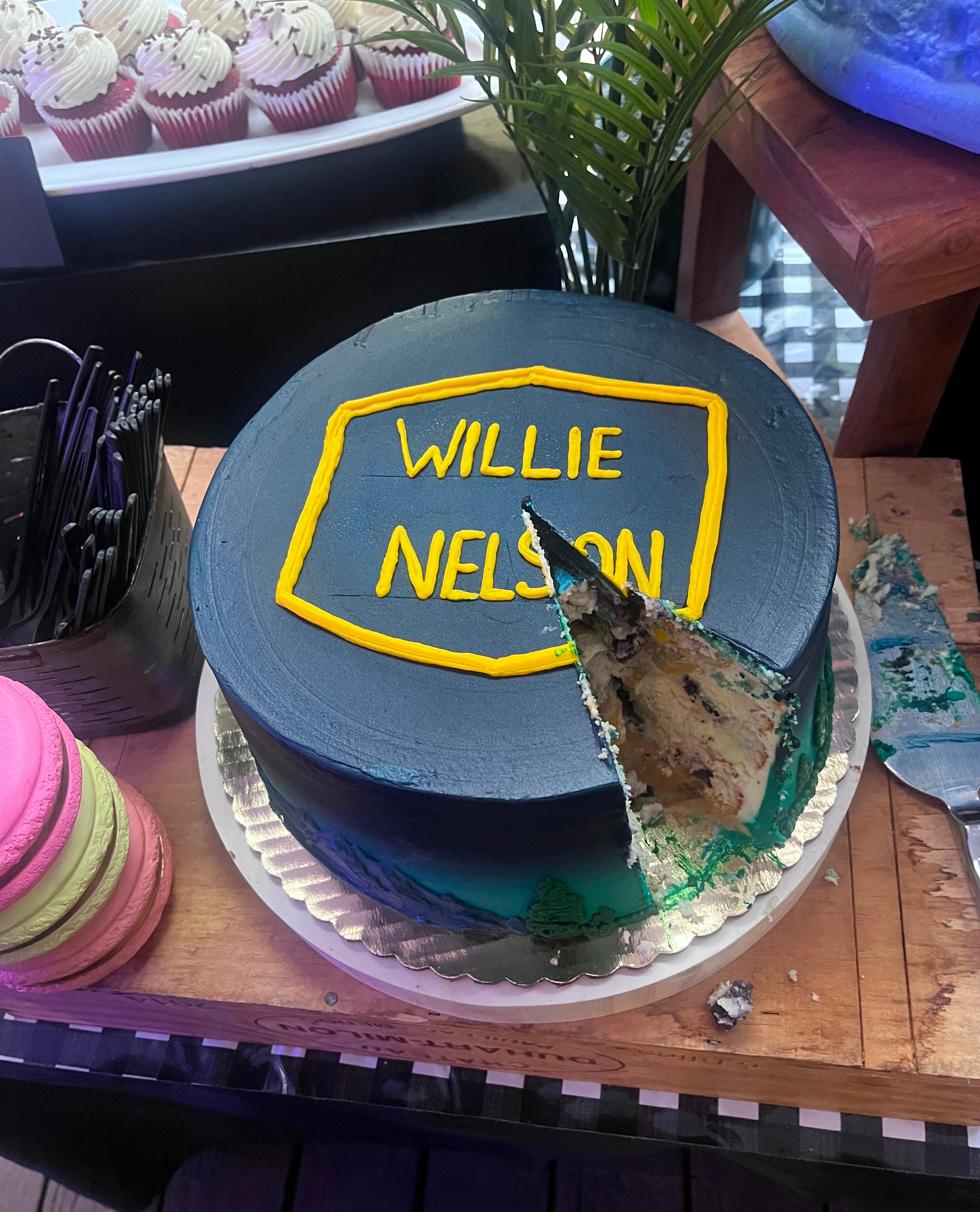
A completely different experience. The Outlaw Fest was cool. Obviously, Willie Nelson is there, and I love Willie. But Farm Aid felt like a much, much bigger event. We were playing like five thousand capacity venues on the Outlaw portion, and then I believe Farm Aid was a stadium.
I just looked it up. Huntington Bank Stadium. Fifty thousand capacity.
Yeah, it was a lot of people. Overall, it just felt like a much bigger production with a lot of moving parts. Literally moving parts. There’s hundreds of crew dudes for all these bands: Dave Matthews, John Mellencamp, Neil Young. There are just road cases everywhere, and there’s all these people wheeling cases around.
It was a thrill to play that with Bob. It was quite incredible for me.
What was your favorite song to play on if you had to pick one?
Definitely “Don’t Think Twice, It’s Alright.”
Because of just how much you liked the arrangement or because of what you specifically were doing?
Both. I know that for the broadcast, no one could hear me. I was pretty much inaudible. I don’t know who made that call. But what I was doing was I basically had a whole bunch of synths set up, some very fuzzy, warm, dreamy, distorted-sounding synth that I would bring in to pad the different chords. I also had some organs which I was using to play some arpeggi under the different chords.
All I can say is, I hope that someone heard it who was there in person, because I thought it was really cool what we were doing.
Could you hear it on the stage? Was it louder in the monitors?
Oh, yeah. I could hear it loud and clear. Bob had a monitor, so he could hear everything. I know he could hear me at the other shows, because he would give me notes. I can only assume that he heard me at this one, but I can’t be sure.
Because after the show, we step off stage. Bob gets whisked into a car. I said bye to the band, because they were going home. That was the end of that leg. They all left, and I stayed to see Neil Young. So unfortunately, I didn’t get to connect with Bob after the show. It would have been nice to have done that.
Was there any talk of it continuing? He started touring again a month later. Was that ever floated as a possibility?
It was floated as a possibility in the sense that anything is possible. All the crew members I spoke to—keyboard tech, production tech, production manager—I asked them, “What do you guys think? Do you think Bob will want more keys?” They just kind of shrugged and were like, “We honestly have no idea.”
So you never heard from anyone again?
I actually spoke with Jeff a couple of times. Jeff basically said that he hasn’t heard from Bob and didn’t know if Bob wanted keyboards or what, and that he would keep me posted. And that was pretty much that.
How did you feel about the whole thing when the dust settled?
It’s an incredible thing to be able to say that I did that. There’s very few people who can say that they played with Bob, and even fewer who can say that they play keyboards with Bob. I’m very grateful, and I feel like I grew as a musician during the experience.
Did you go back and tell your Blondie bandmates about this?
I did. Debbie [Harry], the first thing she said to me was, “So, have you been thoroughly Dylan-ized?”
Thanks Matt! Check out the new Princess Goes album ‘3’ here and look out for the new Blondie album ‘High Noon’ in February.