
Flagging Down the Double E’s is an email newsletter exploring Bob Dylan performances throughout history. Some installments are free, some are for paid subscribers only. Sign up here:
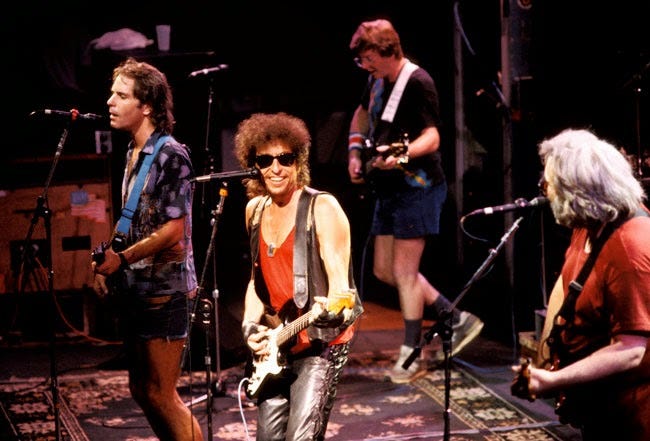
“Dylan & The Dead” is a phrase that causes shudders up the spine of many Dylan fans and Deadheads alike. But the Dylan & The Dead that skeptics are referring to is typically Summer 1987. That’s when the Dead served as Dylan’s backing band, and it’s when the widely-derided live album came from.
But there was an earlier Dylan & The Dead: Summer 1986, 40 years ago this week. They toured together that year, but the Dead did not serve as Dylan’s backing band. He was still playing with Tom Petty & The Heartbreakers, bringing the True Confessions tour I wrote about earlier this year to the United States. For five of those shows, Dylan co-headlined with the Dead. He sat in with the band a couple times too.
In a special four-part Independence Day miniseries, journalist Jesse Jarnow is going to break down each of those stops: Minneapolis, Akron, Buffalo, and, finally, the two shows at RFK Stadium in Washington DC that almost killed Jerry Garcia.
You may know Jarnow as one of our regular Bob-show correspondents here (here’s him writing about Jones Beach last summer). He’s also a major Grateful Dead journalist, co-hosting the official podcast Good Ol’ Grateful Deadcast, writing various liner notes for the band, and doing deep dives into their past shows on Mastodon. He’s also the author of Heads: A Biography of Psychedelic America, Big Day Coming: Yo La Tengo and the Rise of Indie Rock, and Wasn’t That a Time: The Weavers, the Blacklist, and the Battle For the Soul of America—plus an upcoming book on the history of fan taping I’m very excited for.
So there’s nowhere better qualified to take us deep into what was happening with Bob Dylan & The Grateful Dead in 1986. Take it away Jesse.
Subscribe to get all four installments of the Dylan & The Dead 1986 series sent straight to your inbox:
Dylan and the Dead ‘86: Metrodome, June 26th
by Jesse Jarnow
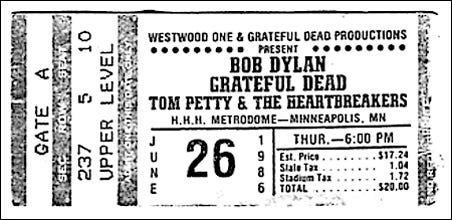
Please don’t ask me to rank anything. I hate it, thanks. But, probably, if I had to pick, or make a chart, summer 1986 would be close to the entwined nadir in my own personal tastes in the music of Bob Dylan and the Grateful Dead, two of my otherwise all-time favorite acts. There are periods of their careers that engage me less, but they all lead towards summer ’86, which is also perhaps why I find it so fascinating that their first five-show intersection occurred at that precise moment, and why I felt compelled to visit the tapes (plus surrounding news coverage and scene reports).
By almost any definition, Dylan’s two July ’86 sit-ins with the Dead, in Akron and D.C., are terrible. And yet, more recently, I’ve also learned to love both (though still won’t argue either of them are any good). What’s more, they apparently meant enough to Dylan himself that he chose to play with the Dead as his backing band the following summer and continued the musical friendship for decades, later crediting the Dead with the reinvigoration that sparked the Never Ending Tour.
A Contact Low
“I had no connection to any kind of inspiration,” Dylan wrote infamously in Chronicles of his tours with the Heartbreakers, not that he’s often been a reliable narrator. “Tom was at the top of his game and I was at the bottom of mine.” Usually, when people caricature Dylan’s voice, it sounds to me like the ’86 version (or maybe Tour ’74)—schnoz to the max.
The Dead were in a different kind of not-great way in the summer of ’86, and mainly lead guitarist Jerry Garcia. “You’re getting a contact low,” Dead drummer Mickey Hart told Joan Baez when she stopped by a 1984 studio session for the Dead’s album in progress, and that’s a feeling I sometimes get with tapes of both acts in the middle ’80s.
Though Garcia worked to clean up from hard drugs following his January 1985 bust in Golden Gate Park (on the way to rehab), and was growing audibly more present at Dead shows, his body was en route to collapse. Just days after the last of the Dylan/Dead dates, Garcia lapsed into a diabetic coma. So one of the larger surprises in my ongoing show-by-show Dead listening project was to discover that the first part of 1986 actually contains some great Dead performances, a good case for highlights-oriented releases (as opposed to complete gigs), including Garcia’s stunning live debut of “Visions of Johanna,” which promptly disappeared again until 1995. Bob Weir brought out his own “Desolation Row” during these same shows, too.
Just before the Dead left for their spring ’86 shows, Dylan had called Garcia from Australia as tour negotiations got underway. “This was all building up, but what it really wanted was some legitimacy,” Garcia told the Buffalo News. “He wanted to believe it was us on the other end and we wanted to believe it was him.”
Dylan and the Dead ’66
In 2018, I put together an essay and accompanying mixes for Tyler Wilcox’s Doom and Gloom From the Tomb, The Ballad of Spike and Jerry: The Frequently Secret and Always Misbegotten Adventures of Bob Dylan and the Grateful Dead, 1971-2003. In part, I wanted to clarify the timeline of the Dylan/Dead relationship. But, since then, the starting point has re-blurred itself.
The earliest place Bob Dylan and Jerry Garcia are documented crossing paths is April 1971 at the Fillmore East, when Dylan was living nearby (and Yippies were rifling through his trash). Rolling Stone reported on Dylan’s presence on the same night the Beach Boys sat in with the Dead, April 27th. Venue crew member (and future Rock ‘n’ Roll High School director) Allan Arkush has since confirmed that Dylan planned to play with the Dead that night, but stalked out after Arkush accidentally flashed his name on the light-show screen before he was ready.
But when I spoke with Dead family member (and Phil Lesh’s then-girlfriend) Rosie McGee, she spoke of a “slim and shady” memory of the Dead and Dylan briefly crossing paths when the Dead were living in Los Angeles in spring 1966. At the time, Dylan was in residence between tour legs at The Castle, Tom and Lisa Law’s mansion/crashpad-to-the-stars in Los Feliz. It’s blurry.
“I can’t say for sure what happened except there was awkwardness,” she says. She was pals with “Eve of Destruction” singer Barry McGuire, then in residence at The Castle, who visited the Dead’s house a few times and danced in the living room while they practiced. She wonders if maybe McGuire brought Dylan with him once, and Dylan didn’t like the vibe and split quickly. (There’s another story by Hettie McGee—no relation—of when the Dead’s LSD chemist, sound engineer, and patron Owsley Stanley stormed The Castle to introduce himself to Dylan.)
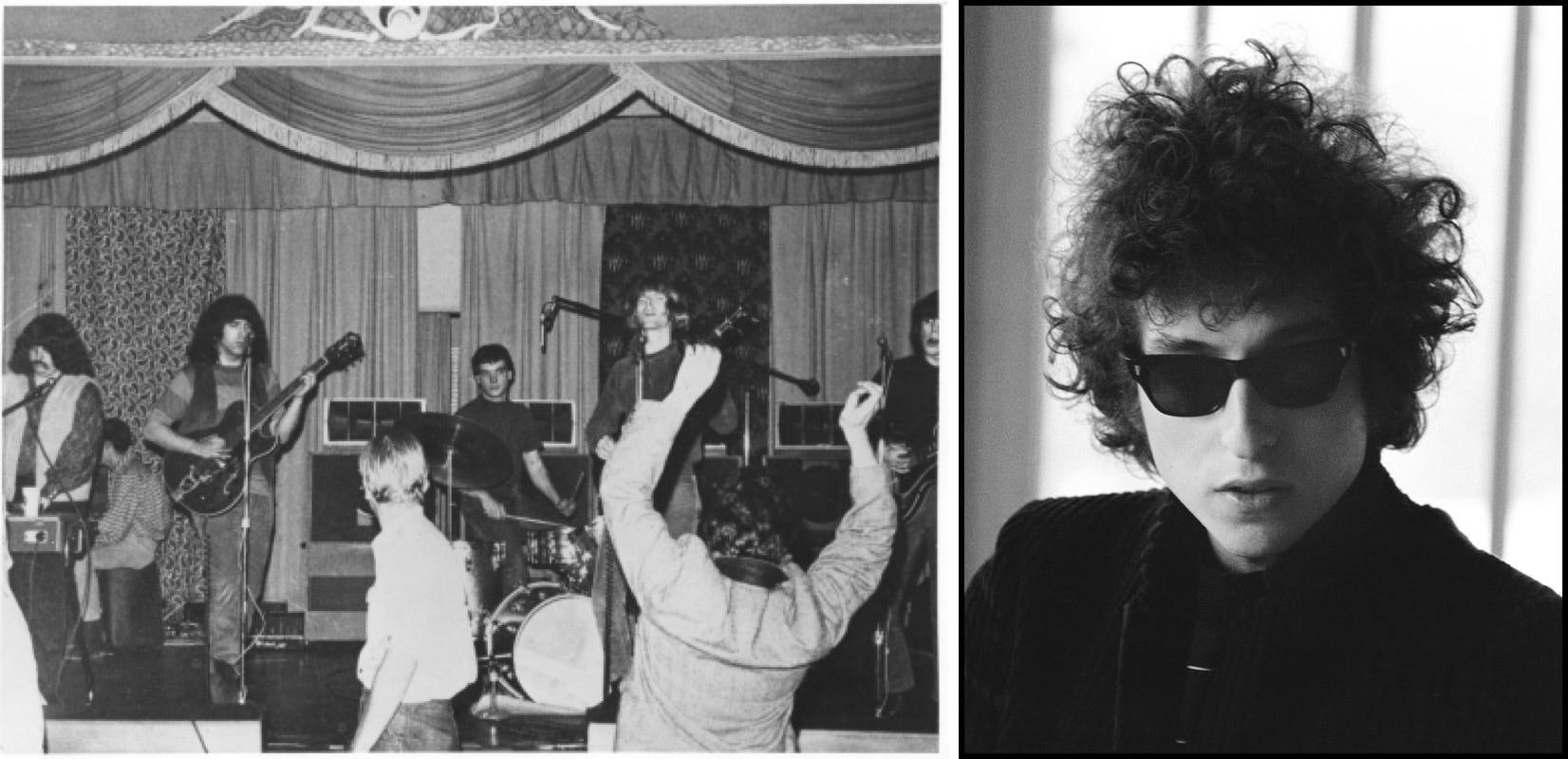

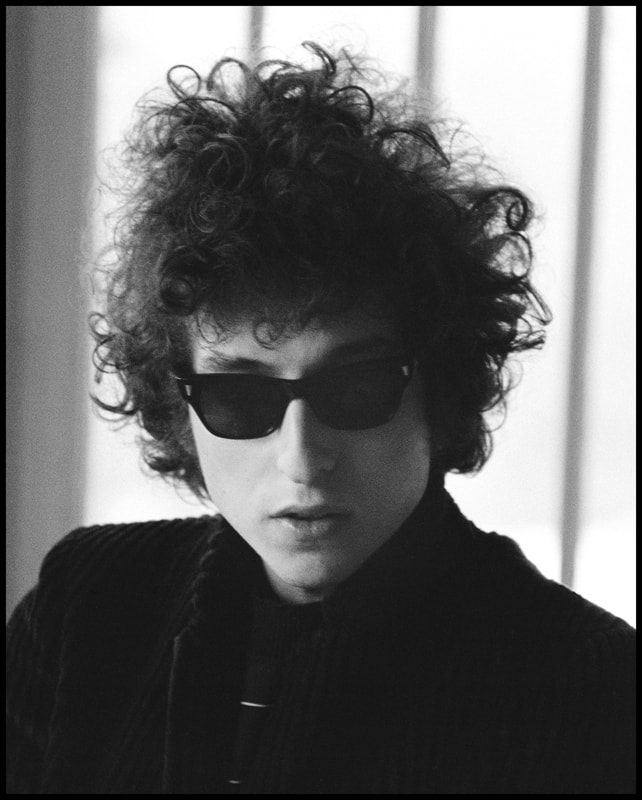
In looking through local news coverage for the summer 1986 tour, though, I came across a preview interview with Garcia in the Minneapolis Star and Tribune, where it notes (in a paraphrase), “They had known each other since 1967, and sharing a bill had been ‘an old dream’ according to Garcia.” And since Dylan didn’t visit San Francisco in ’67 and the Dead didn’t visit Woodstock, I wonder if Garcia’s mostly-reliable memory was calling from the same blurry source material as Rosie.
According to Levon Helm’s memoir, Dylan told him on New Year’s 1971 that he was thinking of touring with the Dead. The Village Voice spotted him at a Roosevelt Stadium show in Jersey City the following summer. Though Garcia sat in for much of a set at San Francisco’s Warfield Theater in 1980, it remained mostly an offstage bromance.
Summer ’86
The Dead hit the road in the summer of ’86, just like they always did, playing amphitheaters and arenas despite not having released a new studio album since 1980.
Bob Dylan hit the road in the summer of ’86 in a manner he’d never previously done. It was his first American tour in a half-decade, and much hyped—in part due to being backed by the Heartbreakers, in part due to the surprise success of Biograph (sadly not because of either his own new studio albums), in part due to the gigs with the Dead. It was also his first pass through the circuit of concert sheds that he’d make his summer home over the next four decades—and where you can find him right this very second, should you be reading this close to publication date.
Between June 26th and July 7th, Dylan’s tour with Tom Petty and the Heartbreakers linked up with the Dead for five co-headlining stadium bills in Minneapolis, Akron, Buffalo, and Washington, D.C. They also played a handful of shows without one another. Though heads could see the tours on successive nights at Alpine Valley, they were also in competition on other dates. Assuming I had my spring copies of The Telegraph or Wicked Messenger in hand with the set lists from Australia (and my copies of The Golden Road with the Dead’s wild set lists from the spring), if I’d had to choose, I’d have gone with the Dead. But I’m not sure either was the better choice.
One person who followed almost the entirety of Dylan/Heartbreakers tour that summer was the late, great Paul Williams, writing about it in the concluding chapter of his 1992 book, Bob Dylan: Performing Artist, 1974-1986, The Middle Years, “the one tour I’ve followed coast to coast -- twelve and a half thousand miles in my wife’s Toyota, 29 shows in a row (I skipped 11 of the last 12).”
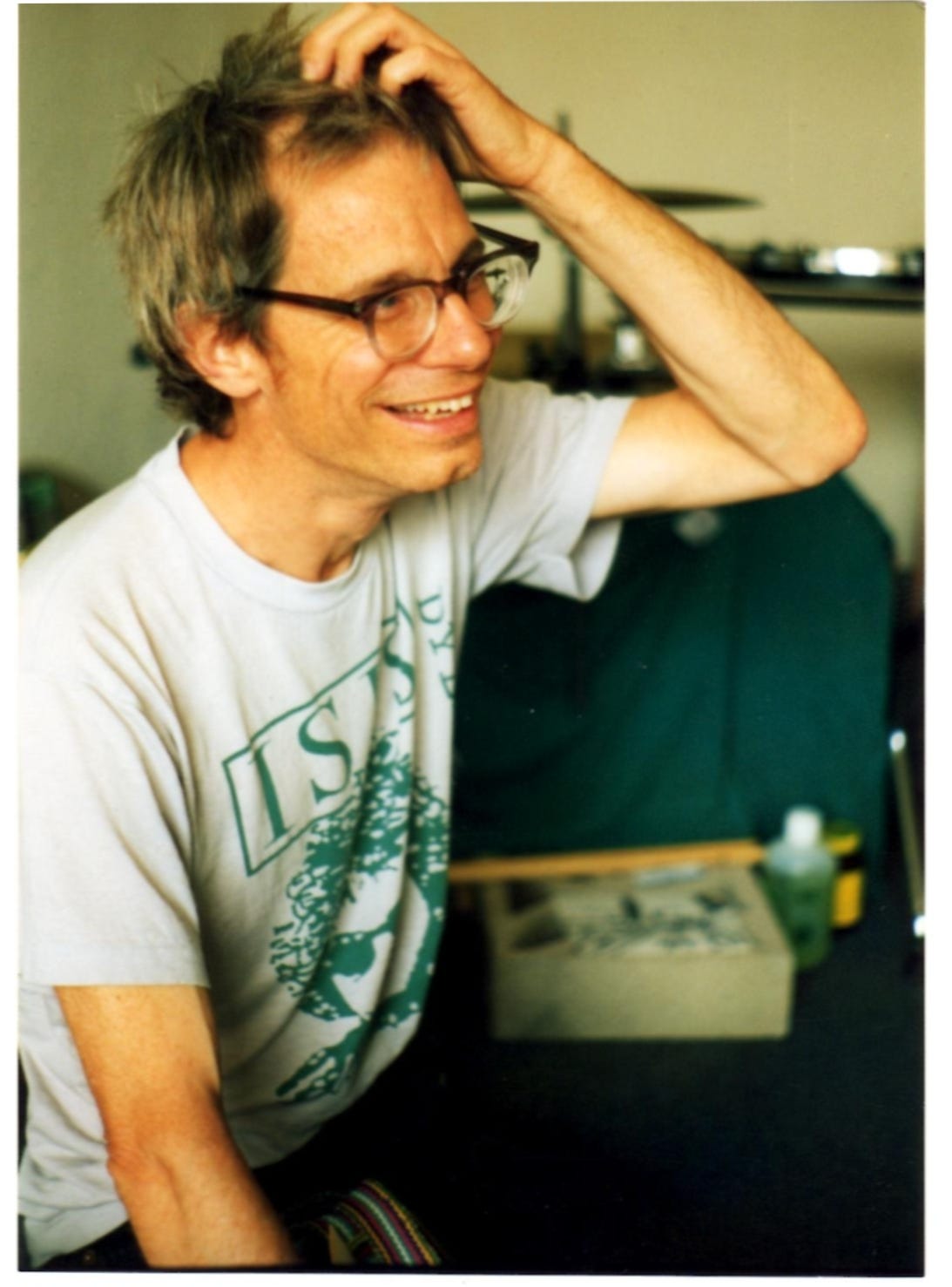
Williams describes Dylan’s shows on terms that will probably sound familiar to anyone who’s been keeping up with the Rough and Rowdy/Outlaw coverage in this newsletter: “For Dylan a tour is a construct, a composition to be performed,” Williams writes. “The set list is the score; as we know, Dylan most years likes to stick with his set list (with variations and evolutions). The score is arranged for certain instruments (this year piano/organ, three guitars, four female voices, bass, drums, very occasionally harmonica, and a touch of slide guitar or mandolin); these arrangements take place not on paper but in the act, usually in rehearsals, and often are not verbalized—they exist in the leader’s mind, and no one else can be sure he or she knows what the songs should sound like.”
The summer of 1986 would prove to be the end of this approach for more than 25 years. Not coincidentally, the Heartbreakers tours were also the last time where Dylan’s ‘60s songs (“Like A Rolling Stone,” “Positively 4th Street,” and others) were virtually guaranteed to sound at least a little like the original arrangements, due in no small part to Benmont Tench’s always-tasty/tasteful B3 and keyboards.
In his chapter on this tour, Williams also tries to come to grips with “the acceptability of recordings as representations or accurate archives of the artist’s work.” He took the “performing artist” part of his argument seriously, arguing that tapes were a “crutch” when trying to describe a concert. He writes, “unless one has an extraordinary memory, the sort that can replay events accurately in the mind’s eye and ear, is to risk not having been present at the performance in the first place.”
In deference to Dylan, the Dead suspended their usual taping section for these shows. Not that it stopped anybody from taping. One enjoyable part of summer ’86, for that matter, is the amount of crispy well-mixed soundboards that sound probably nothing at all like it was to experience the music in the cavernous stadiums where they played. Sorry, Paul.
Nonetheless, having listened to the tapes of the five shows where Dylan and the Dead shared the bill, I think it’s possible to hear why Bob Dylan was ready for something different.
Metrodome: June 26th
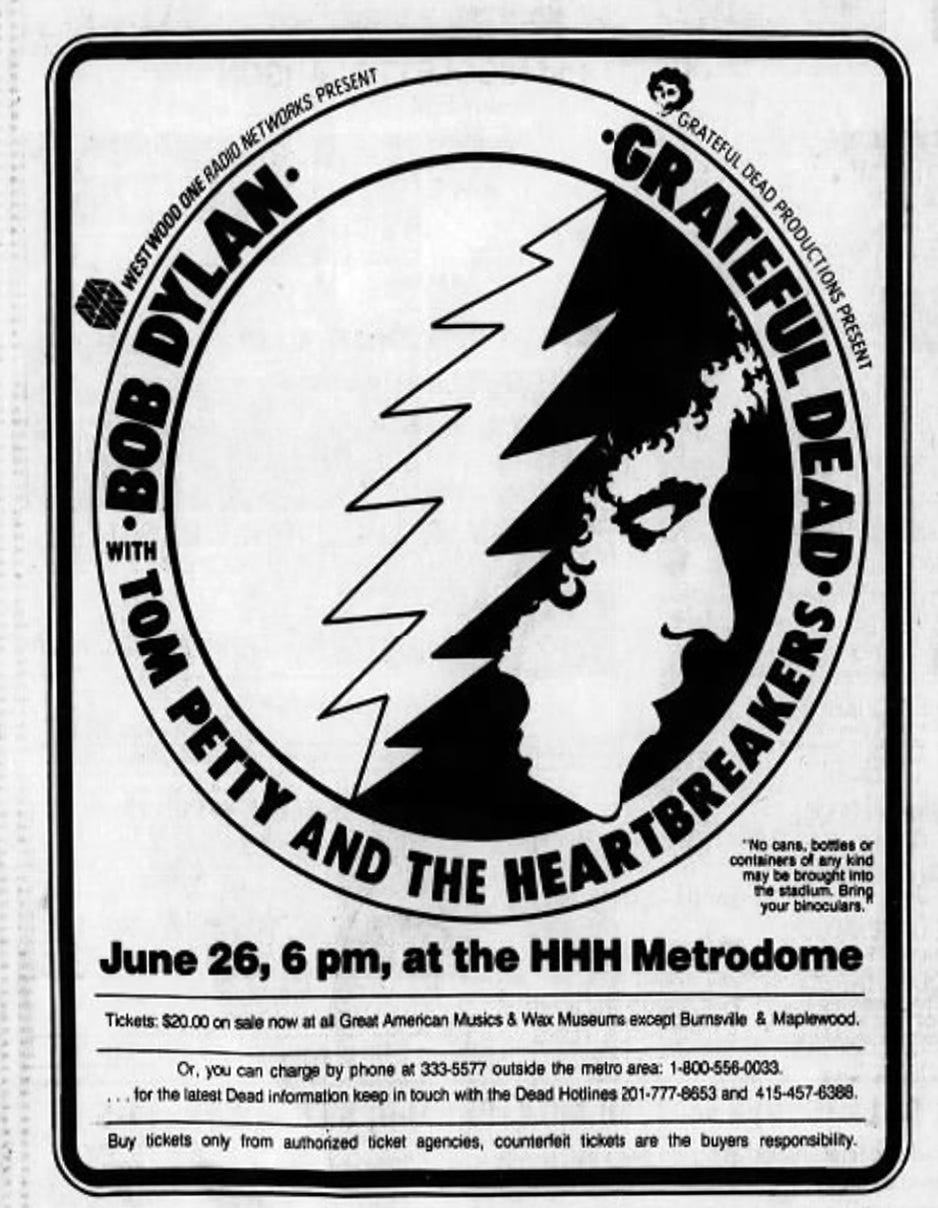
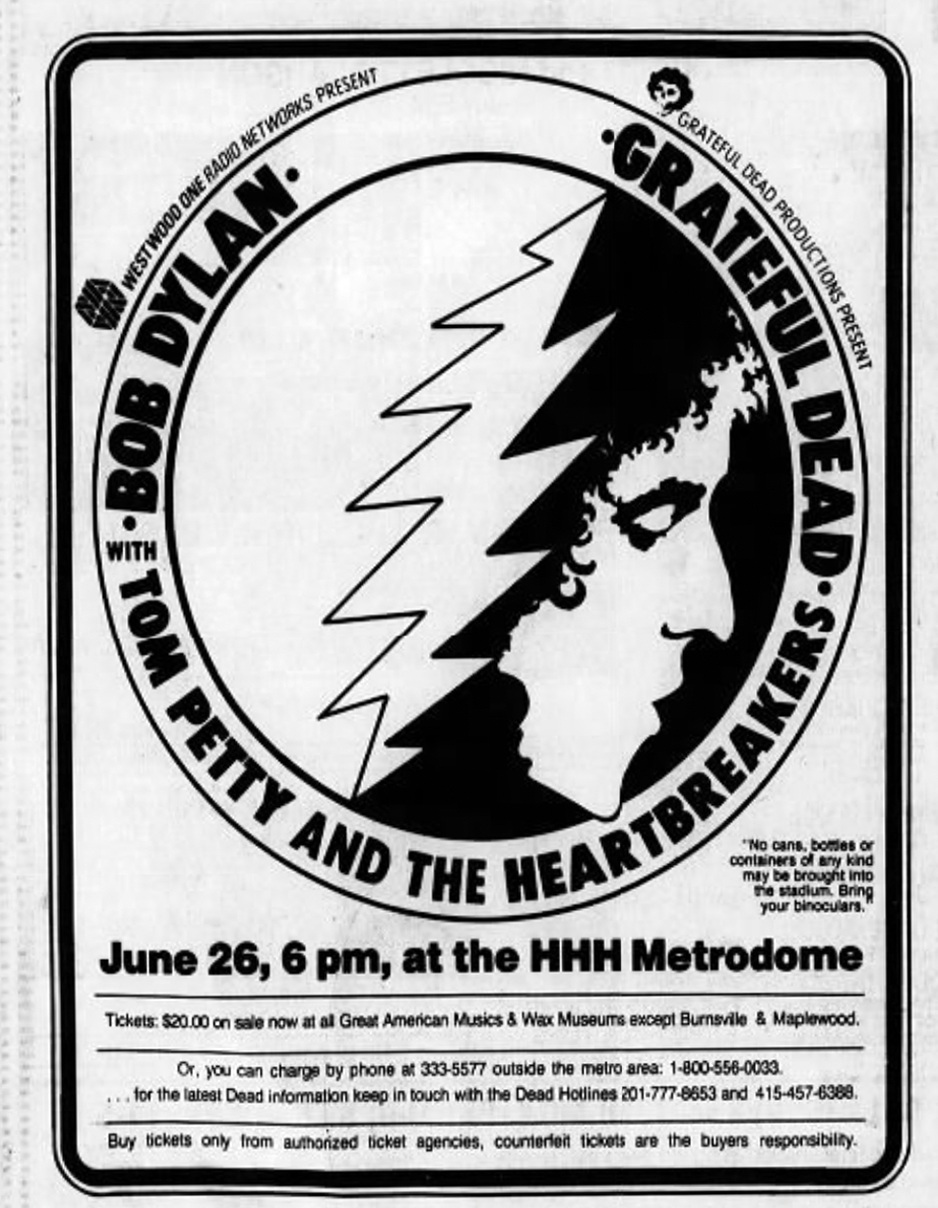
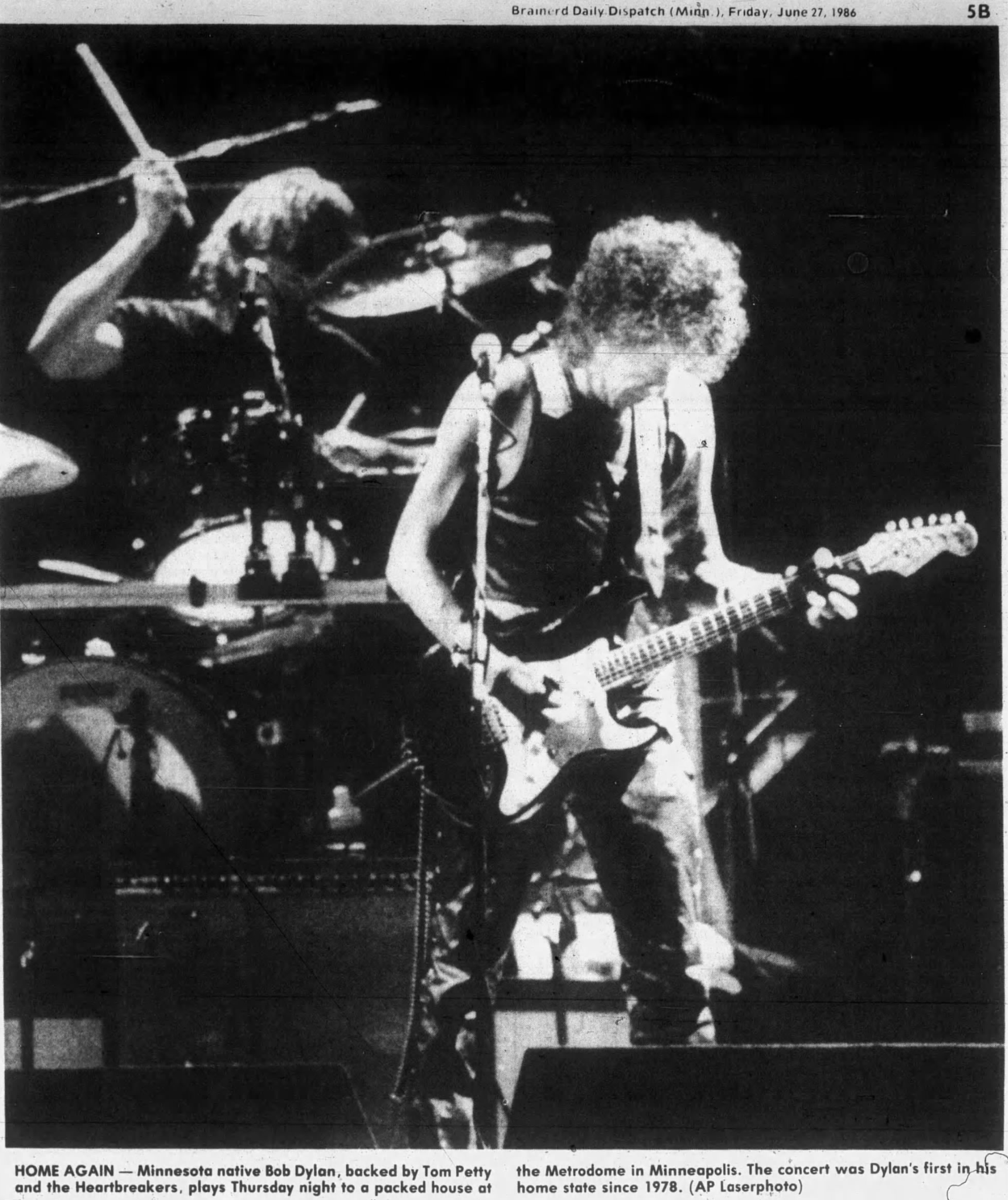
All of the Dylan and Dead shows were Big Deals. The governor of Minnesota attended the show at the Metrodome. So did Dylan’s mother. And around 50,000 others. It was the first ever full-scale concert in the stadium, and Dylan’s first hometown appearance since Halloween ’78. Most of what people remember is that it sounded bloomin’ awful.
The Grateful Dead are rightly known for their obsession with high-quality live audio, such as the infamous Wall of Sound they toured with in 1974, but the June 26th, 1986 show at the Metrodome is often remembered as the single worst-sounding Dead show in history, and getting even worse when Dylan hit the stage. It’s forefront in nearly all memories, and was an Associated Press story on its own. In 2011, Minneapolis Post writer Jeff Severns Guntzel was researching the Metrodome and uncovered (and scanned) a whole folder on the sound issues in the Metropolitan Sports Facilities Commission at the Minnesota Historical Society.
Probably, it was partly the Dead’s fault, though reports from later in the tour indicate that the Dead and Dylan were using their own separate systems, which seems impractical, but also a condition that never stopped Dylan or the Dead. The audience tapes bear out people’s acoustic nightmares, though there are decent soundboards of both Dylan and the Dead’s sets.
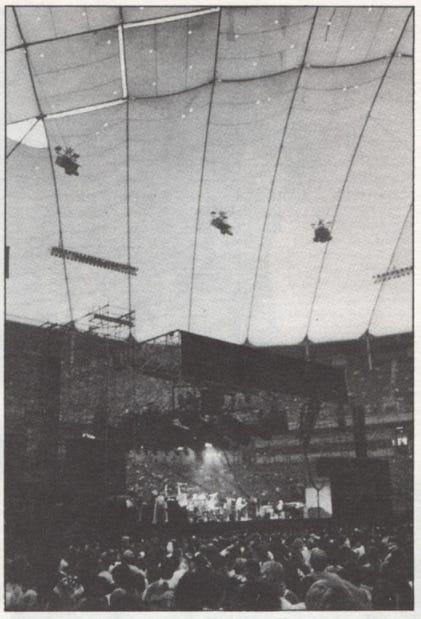
The Dead play first in Minneapolis, condensing their usual two-sets-no-setlist format into an unexceptional two-hour one, the shorter songs in the front and then pivoting to longer jams and their infamous “Drums”/“Space” segment. (They’ll play two sets at all the other Dylan/Dead gigs, though the performances will still amount to about two hours of music.) The Minneapolis tape is unexceptional, highlighted for me by an assured version of Bob Weir’s new-ish “My Brother Esau” and a bouncing “Tennessee Jed.” By the time it reaches “Drums” and “Space,” the segments often enhanced by engineer Dan Healy’s flowering stereo mixes, the soundboard tape runs out, though, and “Space” all but evaporates into the Metrodome’s rafters.
Dylan and the Heartbreakers are in full marathon mode: three Dylan sets punctuated by two Petty mini-sets over two-and-a-half hours. There’s about half of Empire Burlesque, nothing from the forthcoming Knocked Out Loaded, a few greatest hits, a few gospel tunes, and six of the almost four-dozen covers they rolled out over the course of the year. The covers are the standouts for me on this first tape, especially Weldon Rogers’ “So Long, Goodbye and Good Luck” (an inspired opener), Ricky Nelson’s “Lonesome Town” (an obscure crossover between the Dylan and Garcia songbooks), and “Let the Good Times Roll” (the Shirley and Lee version, not the Louis Jordan song the Dead debuted later). Dylan and Petty’s acoustic duet on “I Forgot More Than You’ll Ever Know” is great, too, a high point of nearly every show, with a premonition of tough guy angels to come.
“Across the Borderline” will thankfully survive into the Never Ending Tour years, but it captures what feels off in this era. It’s a powerful song, and the Heartbreakers are great, tasteful and pro, and same for the Queens of Rhythm. But it’s all a little much. There’s not a lot of intimacy or delicacy, even on the acoustic and semi-acoustic songs. But, of course, it’s also the setting. I mean: they’re in the Metrodome.
There’s some adorably giggly local Bob-talk, too. “Everybody knows that I came from around here someplace, but it actually wasn’t here though,” Dylan says. “It was a ways away. It’s a little different up there, actually.” Elsewhere: “Mom, I dunno if you’re still out there, but I love you.”
But it’s his sign-off that feels most prescient, perhaps recognizing that stadiums aren’t a good place to do what he wants to do. “Maybe we’ll come back and play at First Avenue for a year,” Dylan says. “Like once a week.”
1986-06-26, Metrodome, Minneapolis, MN [Dylan set]
1986-06-26, Metrodome, Minneapolis, MN [Dead set partial soundboard, archive.org link]
1986-06-26, Metrodome, Minneapolis, MN [Dead set complete audience tape, archive.org link]
Thanks Jesse! Part two, on Akron—the first show where Dylan actually sat in with the Dead—coming July 2nd. Subscribe to get it sent straight to your email inbox.
Jesse Jarnow co-hosts the official Good Ol’ Grateful Deadcast, and is the author of Heads: A Biography of Psychedelic America, Wasn’t That A Time: The Weavers, the Blacklist, and the Battle For the Soul of America, and Big Day Coming: Yo La Tengo and the Rise of Indie Rock. The Invisible Hit Parade: A Taper’s History of Music will be published next year. The Frow Show can be heard every Tuesday on WFMU (including Bobsday celebrations).
The Paul Williams material is the part that stuck with me—the idea of a tour as a composition to be performed, with the arrangements living in the leader's head rather than on paper, and tapes as a “crutch” that risk you never having been present at all. There's a real tension in it for an archival project like this one: the soundboards that sound “nothing at all like” the cavernous stadium are both the only record we have and a kind of polite lie about what it was to be there. Worth sitting with even forty years on.
My first Dylan show was the 2nd RFK show. I too was a big Dylan and Dead fan. It was my 3rd Dead show. I still remember seeing Garcia up there and thinking wow, he does not look good! I have the original clipping of the Dylan/Dead newspaper ad you have for Minn! I thought Dylan/Petty was solid, Dead not so much. There was definitely a big gap between Dead fans v Dylan. It was definitely a Dead crowd. Maybe 70/30 Dead to Dylan as many have stated—-Dylan was on a “downward” cycle. Thanks for your work and coverage of this one in particular. Really enjoy all of your work